
What Are the 10 Best Impulse Voltage Generators?

Choosing the 10 best Impulse Voltage Generators requires more than comparing peak voltage ratings. A serious evaluation considers waveform accuracy, energy capacity, repeatability, safety systems, and measurement quality. It also examines practical details, such as charging time, control software, spark-gap stability, and laboratory footprint. A generator may deliver 1.2 megavolts, yet perform poorly if its front time drifts between tests.

Performance must be visible.

As high-voltage testing specialist Professor Klaus Feser has stated, “A test is only as valuable as its reproducibility.” This principle guides our comparison. The strongest systems should produce controlled lightning impulses, switching impulses, or custom waveforms under demanding laboratory conditions. They should also support calibrated dividers, reliable triggering, and clear fault records. These features matter when testing transformers, cables, bushings, insulators, and other power equipment.

Still, no ranking is completely universal. A compact university system may suit insulation research better than a large industrial generator. Some buyers prioritize automation, while others need exceptional stored energy or flexible voltage polarity. That makes the word “best” slightly imperfect. It depends on the test object, applicable standards, budget, and operator experience.

This guide compares leading options through an E-E-A-T-focused lens. We consider documented specifications, engineering credibility, field usability, and safety practice. We also acknowledge a limitation: published data cannot reveal every maintenance issue. Real laboratory experience sometimes changes the ranking. The following list therefore aims to provide a practical starting point, not an unquestionable verdict.
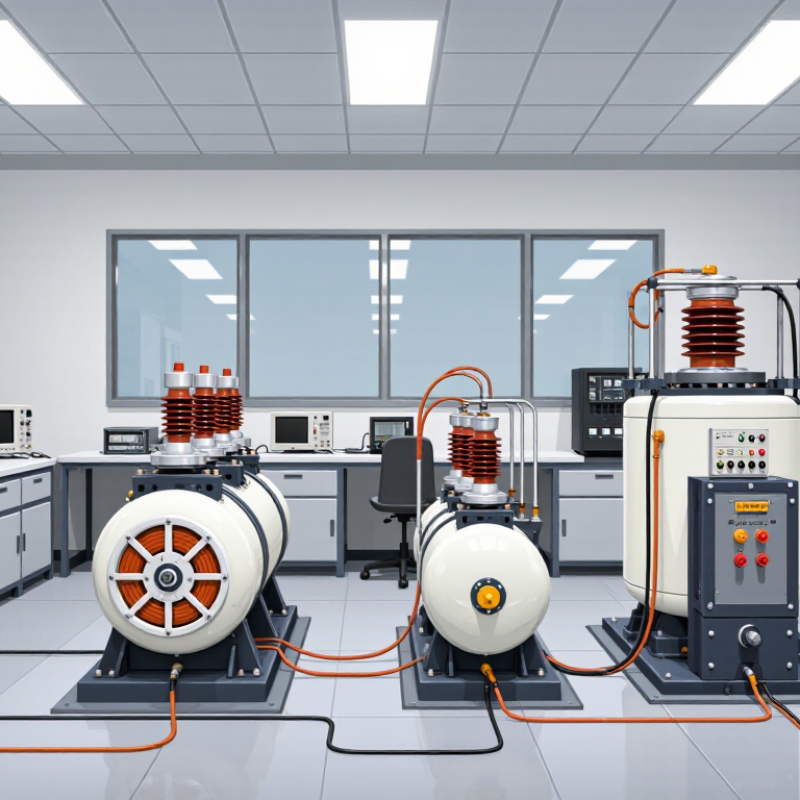
What Are the 10 Best Impulse Voltage Generators?

What Is an Impulse Voltage Generator?

An impulse voltage generator produces a very short, high-voltage surge for testing electrical insulation. It stores energy in capacitors, then releases it through a controlled switching circuit. The resulting pulse may imitate lightning or switching events in power equipment.

A typical system includes a charging unit, capacitor bank, impulse resistor, triggering switch, voltage divider, and measuring oscilloscope. Engineers adjust the front time, tail time, and peak voltage to match a required test waveform. For example, a lightning impulse may rise within microseconds before gradually decreasing. Accurate grounding matters. Small layout errors can distort the waveform or create unwanted reflections.

From practical testing experience, the “best” generator depends on voltage range, repeatability, load capacity, and measurement quality. A compact unit may suit laboratory insulation samples, while a larger system may handle transformers or cable sections. No generator is perfect. Even experienced teams may need several adjustments before the waveform becomes stable.

Tips: Inspect discharge paths before energizing the system. Keep measurement cables short and properly shielded. Confirm the divider ratio with a calibrated reference. Record humidity, temperature, charging voltage, and waveform readings. Never rely on visual distance alone; stored electrical energy can remain dangerous after shutdown. Review unexpected results instead of simply repeating the test.

How Are Impulse Voltage Generators Classified?

What Are the 10 Best Impulse Voltage Generators?

Impulse voltage generators are commonly classified by their circuit structure, output waveform, and test purpose. A single-stage generator uses one charged capacitor and suits lower-voltage laboratory tests. A multistage Marx generator connects capacitors through spark gaps or controlled switches. It produces a steep, high-voltage pulse after staged discharge. Capacitor-discharge systems offer another practical category, especially when repeatable energy delivery matters.

Classification also depends on the impulse waveform. Lightning impulses usually have a fast front and longer tail, such as 1.2/50 microseconds. Switching impulses rise more slowly and last longer, often for high-voltage equipment studies. Some generators create positive pulses, negative pulses, or adjustable polarity. Others use resistors, inductors, and damping networks to shape the front time and tail time. The waveform must be verified with a calibrated voltage divider and a suitable digital recorder.

In real testing, “best” is not a fixed label. It depends on voltage range, stored energy, repetition rate, load behavior, and measurement accuracy. IEC and IEEE procedures provide useful reference points, but laboratory conditions still affect results. A generator may meet a nominal waveform yet perform poorly with a large test object. That detail is easy to miss. Classification can also overlap, so equipment descriptions should state both topology and application. Safe interlocks, discharge grounding, shielding, and documented calibration are essential when comparing the ten strongest candidates.

What Features Define the Best Impulse Voltage Generators?

The best impulse voltage generator is not simply the largest unit. Engineers assess waveform accuracy, output stability, energy control, and measurement quality. IEC 60060-1 defines the standard 1.2/50 microsecond lightning impulse, so a serious generator must reproduce this shape consistently. Small timing errors can distort test results.

Safety features matter just as much. Look for remote operation, interlocked doors, automatic grounding, and visible discharge indicators. A resistor network should limit residual energy after each test.

The IEA’s Electricity 2024 report recorded 2.2% global electricity demand growth in 2023. It also forecasts average annual growth of 3.4% through 2026. This expansion increases pressure on insulation testing and laboratory capacity.

Repeatability separates reliable equipment from impressive equipment. The control system should store test parameters, record peak voltage, and flag abnormal oscillations. Calibration records must be easy to audit.

IEEE Std 4-2013 supports careful measurement practice for high-voltage tests. I would also check recovery time between shots, because brochures often ignore it.

A generator may reach its rated voltage, yet fail under repeated operation. That weakness matters.

Good systems provide modular charging stages, stable triggering, and clear maintenance access. Operators need useful data, not merely a dramatic spark.

What Are the 10 Best Impulse Voltage Generators?

What are the 10 best impulse voltage generators? The answer depends on waveform accuracy, output energy, and test purpose. A useful shortlist should compare charging voltage, capacitance, repetition rate, measurement bandwidth, and safety interlocks.

IEC 60060-1 defines the standard lightning impulse as 1.2/50 microseconds. It also recognizes switching impulses around 250/2500 microseconds. These figures matter when testing insulation, transformers, cables, or surge protection devices.

The strongest ten candidates usually balance these features: stable charging, modular stages, low overshoot, reliable triggering, and repeatable polarity control.

A 2024 industry analysis by Grand View Research valued the global high-voltage equipment market at more than 40 billion US dollars. That growth increases demand for traceable laboratory testing. Still, market size does not prove generator quality. A large cabinet may deliver poor waveforms.

IEEE Std 4 also stresses measurement uncertainty, grounding, and calibrated dividers. One overlooked cable can distort the result.

Tips: Check the 1.2/50 microsecond waveform under the actual test load. Ask for calibration records, not only brochure voltage. Measure noise beside the control cabinet. Keep the test room dry, shielded, and clearly interlocked.

In practice, the “best” generator is rarely the most powerful. It is the one that repeats yesterday’s result today. That sounds simple, but many purchasing comparisons miss it.

How Should You Choose and Use One Safely?

Choosing among the 10 best impulse voltage generators starts with the test requirement, not the price. Define the required peak voltage, rise time, duration, repetition rate, and load. A generator for insulation research may differ greatly from one used for surge testing. Check waveform accuracy under the intended load. An impressive specification can become meaningless with unsuitable cables or measurement equipment.

Safety must shape the purchase. Look for a grounded enclosure, visible discharge indicators, emergency shutdown, door interlocks, and a controlled charging system. Confirm that the generator includes suitable high-voltage probes and verified measurement points. Independent calibration records matter. So does clear service documentation. Ask whether trained technicians can inspect the unit and replace worn components safely.

Use it inside a restricted test area with written procedures. Remove jewelry and keep one operator in control of the key switch. Inspect leads before every test. Connect the grounding path before energizing anything. Keep hands away during charging and wait for the discharge indicator to reach zero. Then apply an approved grounding stick, following the equipment procedure. Never trust silence. My early assumption was that a low repetition rate meant low risk, but stored energy can remain dangerous. Recheck it. Record the waveform, load, weather conditions, and any abnormal sound or odor after each test.

What Are the 10 Best Impulse Voltage Generators? — Selection and Safe-Use Comparison
No. Generator Type Typical Output Range Standard Impulse Waveform Typical Energy or Current Capability Best Suited For Key Selection Criteria Essential Safe-Use Measures
1 Low-Energy Lightning Surge Generator 0.5–6 kV open-circuit voltage 1.2/50 µs voltage impulse Approximately 0.1–2 J, depending on the source capacitor and load Consumer electronics, small power supplies, control boards, and component screening Adjustable voltage, repeatability, output impedance, interlock quality, and built-in discharge control Use a grounded enclosure, current-limited operation, remote triggering, and a verified discharge indicator before access
2 Combination-Wave Surge Generator 0.5–20 kV voltage; commonly up to 0.25–10 kA short-circuit current 1.2/50 µs voltage and 8/20 µs current combination wave From a few joules to several hundred joules, depending on the test level and coupling network AC and DC power-port surge immunity testing Waveform accuracy under load, coupling/decoupling networks, source impedance, polarity control, and test-level range Follow IEC 61000-4-5 procedures, use protective barriers, verify protective-earth continuity, and isolate the equipment under test before rewiring
3 Electrical Fast Transient/Burst Generator Approximately 0.25–4 kV About 5/50 ns individual pulses in bursts, commonly repeated at 5 kHz or 100 kHz Low energy per pulse, but high repetitive pulse counts during a test Testing immunity to relay, motor, contactor, and switch transients Rise time, repetition frequency, burst duration, coupling clamp, capacitive coupling network, and output calibration Keep cables arranged as specified by the test method, avoid exposed conductive parts, and do not defeat the coupling network or safety interlock
4 Damped Oscillatory Ring-Wave Generator Typically 0.5–6 kV Oscillatory waveform commonly centered around 100 kHz, with a damped sinusoidal envelope Usually below 10 J for laboratory immunity testing, varying with source impedance and voltage level Switching-event and distribution-network transient immunity tests Oscillation frequency, damping factor, polarity, source impedance, and performance with the actual equipment load Use shielded test areas where appropriate, keep the return path short, confirm the waveform with a suitable high-voltage probe, and discharge the source after testing
5 Telecommunication Surge Generator Typically 0.5–10 kV, depending on the interface and test method 10/700 µs voltage impulse; associated current waveforms may include 5/320 µs Usually several joules to tens of joules per event Telephone lines, data interfaces, outdoor communication cables, and access-network equipment Line-to-line and line-to-ground modes, balanced coupling, longitudinal current control, and interface-specific fixtures Disconnect external network connections, use approved line simulators, bond the test fixture correctly, and treat every cable terminal as energized during the test
6 High-Voltage Lightning-Impulse Generator Approximately 50–1,200 kV, depending on the number of stages and laboratory configuration Standard 1.2/50 µs lightning impulse; front and tail times are controlled by generator resistors From hundreds of joules to many kilojoules in large laboratory systems Insulation testing of transformers, cables, bushings, switchgear, and other high-voltage apparatus Required crest voltage, load capacitance, front and tail-time adjustment, stage charging voltage, test-bay dimensions, and measurement bandwidth Use a formally controlled high-voltage laboratory, physical exclusion zones, grounding sticks, visible grounding points, interlocked doors, and a documented discharge procedure
7 Switching-Impulse Generator Approximately 100–1,200 kV in high-voltage test laboratories 250/2,500 µs switching impulse Often hundreds of joules to several kilojoules, depending on capacitance, voltage, and test object Extra-high-voltage insulation coordination and external-insulation testing Long-waveform stability, test-object capacitance, charging voltage, weather or environmental conditions, and recording-system response Maintain the required clearance distance, remove stored charge from the test object, restrict access during the complete decay period, and verify grounding before entry
8 High-Current Impulse Generator Approximately 1–200 kA peak current in specialized systems Commonly 8/20 µs; other waves include 10/350 µs for lightning-current simulation From tens of joules to many kilojoules, with very high electromagnetic forces and thermal stress Surge protective devices, lightning-current conductors, fuses, bonding components, and power equipment Peak current, charge transfer, inductance, test-object resistance, busbar geometry, current measurement, and mechanical strength Use remote operation, reinforced barriers, short and mechanically secured conductors, magnetic-force protection, and a confirmed zero-energy state before approaching the setup
9 Marx-Impulse Generator Approximately 100 kV to several megavolts, depending on stage count and charging voltage Configurable lightning, switching, or custom impulse waveforms From low-energy laboratory pulses to multi-kilojoule outputs in large staged systems Research, insulation studies, pulsed-power experiments, and custom high-voltage waveform development Stage synchronization, erected-state insulation, charging resistance, pulse-shaping network, load matching, and diagnostic bandwidth Operate only under an engineered high-voltage safety program; use interlocked access, automatic grounding, remote diagnostics, and a written approach-to-test procedure
10 Precision Reference and Calibration Impulse Generator Typically 0.1–5 kV with controlled output levels Calibrated 1.2/50 µs or other specified reference impulse Generally below 1 J, optimized for measurement repeatability rather than high energy Verification of high-voltage probes, oscilloscopes, surge testers, and laboratory measurement systems Traceable amplitude and time calibration, low jitter, waveform uncertainty, output repeatability, and compatible measurement bandwidth Use rated probes and attenuators, observe maximum input limits, ground the measurement system at one defined point, and confirm capacitor discharge after each sequence

Specifications shown are representative engineering ranges rather than a ranking of particular products. Actual capability depends on generator topology, load impedance, coupling network, test standard, waveform tolerances, and laboratory configuration. Select equipment only after confirming the applicable standard, required crest value, energy or current, test-object characteristics, measurement system, and local electrical-safety requirements.

Scroll to Top