
2026 Top Object Space Telecentric Lens Types Explained?

Choosing an object space telecentric len requires more than comparing magnification charts. In 2026, machine vision teams will continue demanding stable measurements, low distortion, and reliable performance across different object heights. A slight height change can otherwise alter the apparent diameter of a machined hole. That error may reach several pixels.

Optical designer Warren J. Smith described the core principle clearly: “The chief rays are parallel to the optical axis.” This geometry helps preserve an object’s measured size when its position shifts along the optical axis. It also improves edge inspection under controlled lighting. However, telecentricity does not automatically guarantee perfect images. Working distance, sensor format, aperture, depth of field, and illumination still require careful matching.

This guide examines the leading object-space telecentric lens types for modern inspection systems. It compares fixed-magnification designs, modular configurations, large-format models, and lenses built for compact automation cells. Each type has practical strengths and compromises. A lens with excellent telecentricity may still deliver insufficient field coverage. Another model may fit the camera but create unwanted mechanical interference.

Real installation experience matters. Engineers should verify calibration with a certified target, not only trust a catalog specification. They should also inspect vignetting near the image corners. Small oversights can become expensive rework.

The discussion remains deliberately practical. Some assumptions may need reconsideration. “Higher precision” is not always the same as “better value.” Reliable selection depends on the complete measurement system, not the lens alone.
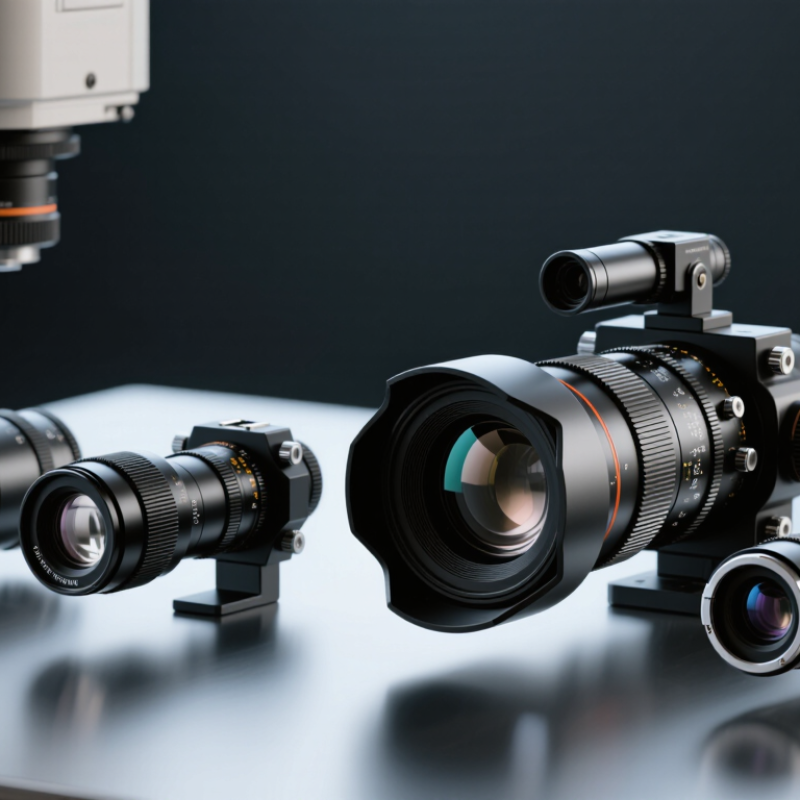
2026 Top Object Space Telecentric Lens Types Explained?

What Object-Space Telecentric Lenses Are and How They Work

Object-Space Telecentric Lenses Explained

Object-space telecentric lenses keep chief rays nearly parallel before they reach the lens. This design stabilizes magnification when an object moves slightly along the optical axis. A washer measured near the lens therefore appears almost the same size as one positioned deeper inside the working distance. The entrance pupil sits effectively at infinity, while the aperture stop is placed near the front focal plane. That geometry reduces perspective error and edge distortion.

Common types include fixed-magnification, bi-telecentric, and large-format telecentric lenses. Fixed-magnification models suit dimensional inspection, where repeatability matters more than flexibility. Bi-telecentric lenses control both object-space and image-space ray angles, supporting precise measurements with sensors and parts at different positions. Large-format versions cover wider targets, but they often demand larger diameters, stronger lighting, and more careful mounting. The 2024 MarketsandMarkets Machine Vision Market report projects continued growth through 2029, reflecting wider use of automated inspection in manufacturing.

Telecentric performance is not magic. Working distance, aperture, sensor size, and illumination must be matched. A lens may be telecentric, yet still produce weak contrast on a reflective metal surface. That is easy to overlook. Practical testing should measure distortion, magnification change, and repeatability across the full inspection depth. Even published specifications can feel optimistic under real factory vibration, heat, and imperfect alignment. A small calibration target can reveal more than a polished datasheet.

Key Optical Features That Define Object-Space Telecentricity

2026 Top object space telecentric lens Types Explained?

Key Optical Features That Define Object-Space Telecentricity

Object-space telecentric lenses keep chief rays nearly parallel on the object side. Their entrance pupil is positioned effectively at infinity. This geometry reduces magnification changes when the target moves along the optical axis. A machined part can appear slightly closer or farther without changing its measured size significantly. That stability is valuable for dimensional inspection.

The aperture stop controls telecentric behavior. Its position, diameter, and alignment affect angular accuracy, numerical aperture, and light collection. High telecentricity usually requires a longer optical path and a practical working distance. Designers must also manage distortion, vignetting, and edge illumination. A lens may perform well at the center but lose uniformity near the field boundary.

In production testing, I would check magnification at several object distances, not one position. A calibrated stage and a traceable reference target reveal small scale errors. Illumination matters too. Strong backlighting can expose edge features, while uneven lighting may hide them. Telecentric lenses are not automatically perfect. They can be larger, darker, and less flexible than conventional optics. That trade-off deserves careful review before selection. The best choice depends on field size, sensor format, working distance, and required measurement tolerance.

2026 Top Object Space Telecentric Lens Types Explained? – Key Optical Features That Define Object-Space Telecentricity
Lens Type Object-Space Optical Principle Typical Telecentricity Typical Distortion Working Distance Characteristics Key Optical Features Common Inspection Uses
Fixed-Magnification Object-Space Telecentric Lens Chief rays remain nearly parallel to the optical axis in object space, so the entrance pupil is effectively positioned at infinity. Usually below 0.1°; premium designs can be lower. Typically below 0.1%; high-performance models may approach 0.01%. Precisely defined and generally fixed; object movement within the specified telecentric range causes very little scale change. Stable magnification, low perspective error, controlled numerical aperture, and high measurement repeatability. Dimensional gauging, connector inspection, precision parts, molded components, and machine-vision measurement.
Bi-Telecentric Lens Chief rays are telecentric on both the object and image sides, keeping magnification stable when either the object or sensor position changes slightly. Object-side and image-side telecentricity are both tightly controlled. Often below 0.1%; selected metrology designs can be significantly lower. Requires careful alignment of the object plane, lens, and sensor; offers the highest tolerance to small positioning errors. Very low perspective distortion, stable image scale, improved edge measurement, and consistent illumination geometry. High-accuracy metrology, semiconductor and electronics inspection, flat-part measurement, and calibration targets.
Object-Space Telecentric Macro Lens Uses a telecentric front optical group to maintain parallel chief rays while imaging at short object distances and high magnification. Commonly below 0.1° within the specified object-side field. Usually below 0.2%, depending on magnification and field size. Short to medium fixed working distance, often optimized for close-up inspection. High resolving power, strong correction of perspective, and compatibility with coaxial or ring illumination. Small mechanical parts, solder joints, medical components, precision plastics, and surface-feature inspection.
Object-Space Telecentric Zoom Lens Maintains object-side telecentricity over a defined magnification range through synchronized movement of internal optical groups. Typically below 0.2° across the specified zoom range; performance varies with zoom position. Often below 0.3%, but may change as magnification is adjusted. May remain approximately constant or change within a controlled range, depending on the optical design. Adjustable magnification, telecentric stop control, flexible field coverage, and easier adaptation to different part sizes. Multi-format inspection systems, laboratory imaging, production lines with varying part dimensions, and prototype inspection.
Large-Object-Space Telecentric Lens Provides parallel object-side chief rays across a comparatively large field, reducing size errors over wide components. Commonly below 0.2° across the usable field. Typically below 0.2% to 0.5%, depending on field size and magnification. Usually medium to long and carefully specified to preserve telecentric performance across the entire field. Large clear aperture, uniform scale across the field, broad illumination access, and robust mechanical packaging. Battery cells, automotive components, trays, wafers, large molded parts, and sheet-material inspection.
High-NA Object-Space Telecentric Lens Combines object-side telecentricity with a relatively large numerical aperture to collect more light and resolve finer details. Usually below 0.1° within the designed field and aperture setting. Typically below 0.1% in metrology-oriented designs. Fixed and sensitive to focus position; precise mechanical mounting is important. High light-gathering capability, improved resolution, shorter depth of field, and strong performance with small features. Micrometer-scale inspection, precision machining, fine-edge measurement, and high-contrast component analysis.
Low-NA / Extended-Depth-of-Field Telecentric Lens Uses a smaller object-side aperture angle to maintain telecentric imaging while increasing the range over which objects remain acceptably sharp. Typically below 0.2° within the specified aperture and field. Usually below 0.2% to 0.5%. Fixed working distance with greater tolerance to moderate height variation than high-NA designs. Longer depth of field, reduced sensitivity to surface-height changes, lower light collection, and moderate resolution. Uneven parts, stepped components, packaging inspection, dimensional checks, and objects with variable height.
Coaxial-Illumination-Compatible Telecentric Lens Maintains object-space telecentricity while allowing light to travel through or along the optical axis toward reflective or flat surfaces. Typically below 0.1° to 0.2%, depending on the integrated illumination path. Generally below 0.2% in measurement-focused configurations. Fixed working distance with clearance for an integrated beam splitter or coaxial lighting module. Axial illumination, reduced shadowing, improved image uniformity on flat surfaces, and low perspective error. Silicon wafers, glass, printed markings, flat machined surfaces, electronic packages, and bore inspection.
Object-Space Telecentric Lens with Adjustable Aperture Uses an aperture stop located near the object-side telecentric pupil; changing the aperture alters numerical aperture while preserving the telecentric layout within limits. Often below 0.1° to 0.2% across the supported aperture range. Commonly below 0.2% when used within the specified aperture settings. Fixed working distance; aperture changes may affect depth of field, resolution, and illumination requirements. Trade-off between resolution, depth of field, diffraction, and light throughput can be tuned for the application. Flexible metrology stations, research systems, variable-surface inspection, and applications requiring controlled depth of field.
Selection note: Object-space telecentricity is defined by the chief rays being parallel, or nearly parallel, on the object side. The most important specification is the permitted magnification change over the stated object-distance range. Actual performance depends on magnification, sensor format, aperture setting, field position, wavelength, working distance, and alignment accuracy. Values shown are representative engineering ranges rather than universal limits.

Main Types of Object-Space Telecentric Lenses in 2026

2026 Top Object Space Telecentric Lens Types Explained?

Object-space telecentric lenses keep chief rays nearly parallel before reaching the target. This design reduces measurement errors caused by object height changes. In a factory, a small metal pin can move several millimeters without showing a large size shift. That stability matters in dimensional inspection.

The standard fixed-magnification type suits repeatable measurements, such as checking holes, edges, and connector spacing. Its working distance stays constant, and its image scale is predictable.

Bilateral, or double-telecentric, lenses maintain telecentricity on both object and image sides. They usually deliver better accuracy when sensor position and object depth both vary. The trade-off is a larger housing and higher cost.

Telecentric zoom lenses provide adjustable magnification for changing part sizes. They help engineers inspect mixed components without replacing the optical system. However, zoom settings can introduce calibration differences, especially near the ends of the range. Large-format telecentric lenses cover wider sensors and broad inspection fields. High-NA versions collect more light and reveal finer edges, but they often reduce depth of field.

In real installations, I check the light source, field size, and mounting tolerance together. A lens can be optically excellent yet perform poorly with uneven illumination. This is where specifications can mislead. I also leave room for imperfect alignment, because production fixtures rarely remain ideal.

How to Compare Telecentric Lens Performance and Compatibility

2026 Top Object Space Telecentric Lens Types Explained?

Object-space telecentric lenses keep chief rays nearly parallel before they reach the target. This design stabilizes magnification when working distance changes slightly. It suits dimensional inspection, barcode reading, and precision measurement. Bi-telecentric lenses extend this control on both object and image sides.

Compare performance through measurable data, not attractive specifications. Check telecentricity error, distortion, MTF, resolution, and illumination uniformity. A lens with low distortion may still lose contrast near the field edge. Ask for test conditions, including wavelength, aperture, sensor size, and working distance. Otherwise, comparisons become unreliable.

Compatibility needs equal attention. Match the lens image circle with the sensor format. Confirm the mount, flange distance, back focal length, and available mechanical clearance. Pixel size also matters; excessive optical resolution can expose sensor noise instead of useful detail. A larger lens is not automatically better. I have seen systems fail because the selected lens required more coaxial lighting space than the machine allowed. Small oversights matter. Recheck the real target, not only the catalog drawing.

Selecting the Right Lens for Precision Vision Applications

2026 Top Object Space Telecentric Lens Types Explained?

Selecting the right lens begins with the measurement, not the camera. An object-space telecentric lens keeps magnification nearly constant when a part moves along the optical axis. This helps measure hole diameter, edge position, and component spacing. Fixed-magnification designs suit stable inspection stations. Variable-magnification models offer flexibility during setup, but they may introduce calibration challenges. Double-telecentric lenses control both object and image-side geometry. They are valuable when dimensional accuracy matters most.

Machine vision demand continues to grow. MarketsandMarkets’ 2024 Machine Vision Market report forecasts growth from about USD 13.7 billion in 2023 to USD 20.8 billion by 2028. Grand View Research also reports strong expansion through 2030. These figures reflect rising inspection needs, not a reason to overspend on optics. Small details matter.

Match the lens to the sensor size, field of view, working distance, and required tolerance. A larger sensor may require a wider image circle. A longer working distance can protect the lens from dust, vibration, or moving parts. Check numerical aperture when lighting is limited. Higher aperture often improves resolution, but it can reduce depth of field. In production trials, shiny metal surfaces may reveal reflections that bench tests miss. Test before scaling. A specification sheet rarely tells the whole story. Budget models can perform well, yet distortion, alignment, and thermal drift still deserve measurement.

Scroll to Top