
What Are the 2026 Top Types of Blind Flanges?
Choosing the right Blind Flanges in 2026 requires more than comparing prices or catalog photographs. Engineers must match each flange to pressure, temperature, pipe size, fluid service, and maintenance conditions. A blind flange may close a vessel nozzle, isolate a pipeline, or support pressure testing. Its solid face hides the bore, creating a dependable barrier when correctly selected and installed.
This guide examines the leading types expected in 2026, including raised-face, flat-face, ring-type joint, spectacle blind, and high-pressure blind flanges. It also considers common standards, such as ASME B16.5, ASME B16.47, and EN 1092-1. These references help define dimensions, pressure classes, facing details, and material requirements. Still, standards do not replace engineering judgment. A carbon steel flange may suit ordinary water service but fail to meet corrosion demands in a chemical line. Stainless steel can improve resistance, yet its cost and gasket compatibility require review.
Details matter.
During real inspections, technicians check the flange marking, heat number, bolt condition, gasket seating area, and alignment. They also verify certificates and pressure ratings before installation. A neat ranking can mislead because “top” depends on the operating environment. That distinction is easy to miss. This introduction provides a practical framework for comparing Blind Flanges, identifying their strengths, and questioning weak assumptions before procurement. Some applications appear straightforward but deserve a second review, especially where thermal cycling, vibration, or frequent line opening may affect sealing reliability.
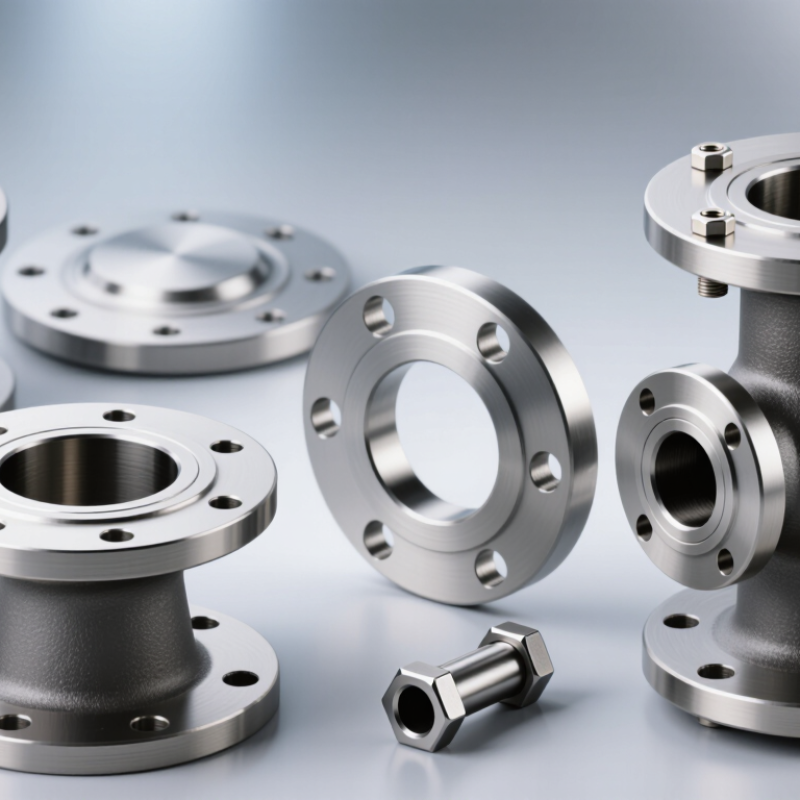
Blind Flange Standards: ASME B16.5 Covers NPS ½–24 and Classes 150–2500
What Are the 2026 Top Types of Blind Flanges?
ASME B16.5 defines blind flange dimensions for NPS ½ through 24. It also covers pressure classes 150, 300, 400, 600, 900, 1500, and 2500. These limits matter during selection. A flange outside this range may require another standard.
The raised-face blind flange remains common in process piping. Its raised sealing area concentrates gasket pressure around the bolt circle. Flat-face designs suit equipment with lower allowable loads. They help reduce excessive stress on weaker mating surfaces. Ring-type joint blind flanges serve demanding high-pressure and high-temperature connections. Their metal ring gasket sits inside a precision-machined groove. Small surface damage can still cause leakage.
Field inspection should verify the NPS, class, facing, bolt-hole pattern, and material marking. Do not judge compatibility by diameter alone. A Class 150 flange and a Class 600 flange may look similar at a quick glance, yet their drilling and pressure ratings differ. The pressure-temperature rating also changes with material and service temperature. This detail is easy to miss. It should not be.
ASME B16.5 does not automatically approve every installation condition. Engineers still need to check gasket selection, bolt stress, corrosion allowance, and piping loads. In practice, installation records are sometimes incomplete. That weakness deserves honest review before procurement or shutdown work.

Raised-Face Blind Flanges: The Common Choice for General Process Piping
In 2026, raised-face (RF) blind flanges remain a common choice for general process piping. Their raised sealing surface concentrates gasket pressure around the bore. This design supports a dependable seal when the flange, gasket, and bolts are correctly matched. It also gives technicians a familiar installation routine. Familiarity matters during shutdowns. A blind flange closes a pipe end, nozzle, or future branch connection. Its solid plate can support pressure testing and planned isolation. Yet RF is not automatically the best option for every service.
Selection starts with pressure class, nominal size, temperature, and fluid compatibility. Common dimensional standards include ASME B16.5 for many smaller sizes and ASME B16.47 for larger flanges. The flange face must match the mating flange. A full-face gasket should not be casually substituted for a raised-face gasket. Bolt tightening also deserves attention. Cross-pattern tightening, clean threads, and calibrated tools reduce uneven gasket compression. Small assembly errors can cause serious leakage. Field experience shows that flange alignment often matters as much as material grade.
For carbon steel systems, engineers may specify carbon steel, stainless steel, or alloy materials. The choice depends on corrosion risk, temperature, cycling, and process chemistry. Inspect the face for dents, radial scratches, and warping before installation. Do not reuse a compressed gasket unless the governing procedure permits it. That shortcut can fail later. Record the torque sequence and inspection findings in the maintenance log.
What Are the 2026 Top Types of Blind Flanges? - Raised-Face Blind Flanges: The Common Choice for General Process Piping
| Blind Flange Type | Typical Facing | Common Standards | Typical Pressure Classes | Best-Suited Applications | Main Advantages | Key Limitations | Selection Priority |
|---|---|---|---|---|---|---|---|
| Raised-Face Blind Flange (RF) | Raised face with a defined gasket seating area | ASME B16.5 for NPS 1/2–24; ASME B16.47 for larger nominal sizes; dimensional compatibility commonly specified with ASME B16.10 and B16.20/B16.21 gasket requirements | Class 150, 300, 400, 600, 900, 1500, and 2500 | General process piping, water treatment, utilities, chemical service, oil and gas systems, and equipment isolation | Widely available; straightforward gasket installation; broad size and rating range; suitable for most general-purpose bolted flange connections | Requires correct gasket compression and bolt tightening; the raised face should be protected from impact and distortion | Most common choice for general process piping |
| Flat-Face Blind Flange (FF) | Flat gasket contact surface across the flange face | ASME B16.5; dimensions and drilling must match the connected flange system | Commonly Class 150 and selected lower-pressure services | Cast iron, ductile iron, fiberglass-reinforced plastic, non-metallic piping, and applications where mating flanges require flat faces | Reduces the risk of damaging a brittle flat-faced mating flange; simple face geometry | Should not normally be bolted directly to a raised-face flange; excessive bolt load can damage weaker materials | Use when required by the mating flange or piping material |
| Ring-Type Joint Blind Flange (RTJ) | Precision-machined annular groove for a metallic ring gasket | ASME B16.5; RTJ groove and ring dimensions commonly specified by ASME B16.20 | Commonly Class 600, 900, 1500, and 2500 | High-pressure and high-temperature hydrocarbon service, upstream oil and gas, process units, and critical pressure boundaries | Strong metal-to-metal sealing principle; suitable for severe pressure and temperature conditions when correctly installed | Higher cost; requires precise groove and ring matching; the groove can be damaged during handling; the gasket is generally not reused | Select for severe service or when the piping specification requires RTJ |
| Spectacle Blind / Figure-8 Blind | Usually RF or RTJ, depending on the connected flange system | ASME B16.48 for line blanks; connected flange dimensions normally follow ASME B16.5 or ASME B16.47 | Available in pressure classes compatible with the applicable line flange system | Positive isolation during maintenance, turnaround work, hazardous-service isolation, and systems requiring visible verification of open or closed status | Provides a visible and mechanically positive isolation point without removing the line blind from the flange pair | Heavier and more space-intensive than a standard blind flange; hinge, spacer, or rotation clearance may be needed | Use where operational isolation and visual status identification are important |
| Spacer and Spade (Paddle Blind) | Typically RF or RTJ to match the adjoining flanges | ASME B16.48 for line blanks; flange drilling and facing must match the piping system | Selected to match the connected flange pressure class | Process plants that require frequent positive isolation, maintenance operations, and line-blinding programs | Separate spacer and spade pieces are easier to identify and can be selected for the required operating condition | Requires adequate access and storage space; correct alignment and gasket replacement are essential after each changeover | Use when isolation changes are frequent and a dedicated line-blind system is preferred |
| Long-Weld-Neck Blind Flange | Raised face or RTJ, depending on service requirements | Flange dimensions typically based on ASME B16.5 or ASME B16.47; design details may be project-specific | Commonly used in higher-pressure or specialized piping systems | High-integrity connections, thick-wall piping, high-stress locations, and systems requiring an extended hub or transition geometry | Extended hub can provide improved alignment and a gradual transition into the pipe or equipment connection | More expensive and less commonly required for ordinary line termination; installation details need careful engineering review | Use only when mechanical design or stress requirements justify the extended configuration |
Ring-Type Joint Blind Flanges: Metal Sealing for High-Pressure Classes 600–2500
Among the 2026 top types of blind flanges, ring-type joint blind flanges remain vital for severe service. They use a metallic ring to create a concentrated seal inside a precision-machined groove. This design suits high-pressure classes 600, 900, 1500, and 2500. Small details matter.
In practical inspection, flange alignment often matters as much as pressure rating. The groove should be clean, continuous, and free from dents. The ring material must match the process temperature, fluid conditions, and flange hardness. Oval and octagonal rings are common choices, but the correct profile depends on the groove design. Fit matters. A ring that looks acceptable may still be damaged.
Reliable selection should reference applicable standards, including ASME B16.5 or B16.47 for flange dimensions and ASME B16.20 for metallic ring gaskets. Technicians should confirm the pressure class, facing type, bore details, and ring identification before installation. Bolts require controlled tightening in a crosswise sequence. Uneven loading can distort the flange and create a leak path. Used rings should not be reused, even when no obvious mark appears. This point is sometimes overlooked. It deserves a second check during maintenance planning. Pressure testing should follow the approved engineering procedure, with records kept for traceability.
Ring-type joint (RTJ) blind flanges are available in ASME pressure classes 600, 900, 1500, and 2500. The class designation indicates the standardized pressure-class category; the actual allowable pressure depends on flange material, temperature, size, and the applicable pressure-temperature rating table.
Flat-Face Blind Flanges: Low-Pressure Service and Full-Face Gasket Compatibility
Flat-face blind flanges remain a practical choice for low-pressure piping in 2026. Their flat sealing surface supports full-face gaskets, which cover the entire flange face. This design spreads bolt pressure across the gasket instead of concentrating it near the bore. It can reduce flange distortion on weaker equipment nozzles.
Selection still requires careful engineering. Check the pressure-temperature rating, flange dimensions, material grade, and bolt pattern against the piping specification. A full-face rubber, compressed fiber, or elastomeric gasket may suit the service. The gasket should align with the bolt holes and remain clean during installation. Small misalignment matters.
Use caution with raised-face connections. A flat-face flange needs the correct gasket thickness and mating surface. Mixing face types without an approved transition can create uneven compression. Tighten bolts in a gradual cross pattern, then verify the final torque with calibrated equipment. Do not rely on appearance alone.
The details matter most.
Flat-face blind flanges are often selected for water lines, utility piping, and low-pressure process sections. They are not automatically suitable for high-temperature or severe chemical service. Engineers should confirm compatibility with the fluid, operating cycle, and maintenance plan. In the field, gasket choice is sometimes treated as an afterthought. That habit deserves reconsideration. A well-rated flange can still leak when the gasket, bolts, or face finish is wrong. Inspect the sealing surface before assembly, and record the installation values for future checks.
Large-Diameter Blind Flanges: ASME B16.47 Applies to NPS 26–60 Systems
What Are the 2026 Top Types of Blind Flanges?
For large-diameter piping, ASME B16.47 applies to NPS 26–60 systems. These sizes appear in refineries, power facilities, water infrastructure, and heavy process plants. A blind flange closes a pipe end without a central bore. It also allows future access for inspection or maintenance.
The main choices include raised-face and ring-type-joint blind flanges. Raised-face designs suit many general industrial connections. Ring-type-joint versions support high-pressure service when precise sealing is required.
Pressure classes commonly include 150, 300, 400, 600, and 900, depending on the applicable design and material. Series A and Series B dimensions can differ, especially in outside diameter, bolt layout, and weight. Check carefully.
Selection should begin with NPS, pressure-temperature conditions, material compatibility, facing, and bolting. A 48-inch blind flange can be difficult to handle, align, and torque evenly. Small installation errors may create leakage or flange distortion. That detail is often underestimated. Engineers should also confirm the project specification and the exact ASME edition. B16.47 provides dimensional requirements, but the complete piping design may require additional standards and calculations. In practice, the cheapest option is not always the safest or easiest to maintain.

