7 Best Galvanized Closed Head Steel Drums for Global Buyers?
Choosing the right Galvanized Closed Head Steel Drum requires more than comparing prices and photographs. Global buyers must examine steel thickness, zinc coating quality, closure design, seam construction, lining compatibility, and pallet stability. A drum may look bright and durable, yet poor welding can create weak points around the chime. Small details matter.
W. Edwards Deming, a leading quality-management expert, said, “Quality comes not from inspection, but from the improvement of the production process.” His principle applies directly to steel drum sourcing. Reliable manufacturers control forming pressure, welding temperature, coating consistency, and leak testing before shipment. Buyers should request production records, dimensional drawings, coating specifications, and current inspection reports. Do not rely on polished marketing language alone.
This guide reviews seven Galvanized Closed Head Steel Drum options for international purchasing teams. Each option deserves attention to capacity, tare weight, closure type, corrosion resistance, and transport performance. Some drums suit dry industrial materials better than humid warehouse conditions. Others offer stronger protection but add shipping weight. That trade-off is easy to overlook.
Real procurement is rarely perfect. Supplier data can be incomplete. Product names may also hide meaningful differences. Therefore, buyers should confirm UN certification only when their lawful application requires it, and verify all claims independently. A practical evaluation includes sample inspection, closure testing, stacking checks, and communication with the factory. The best drum is not always the cheapest. It is the one that performs consistently from production floor to destination warehouse.
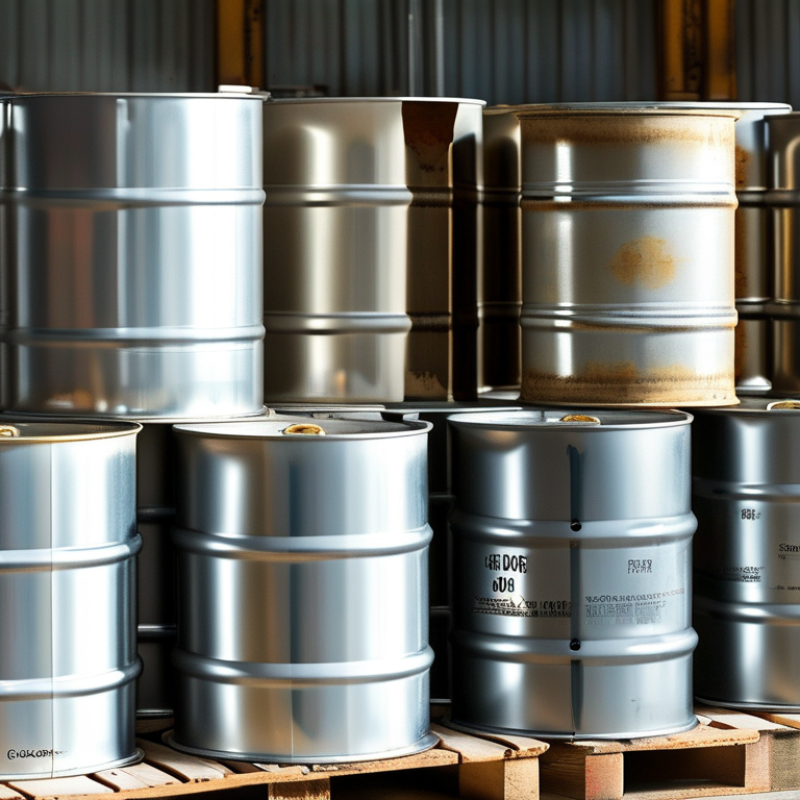
Galvanized Closed Head Steel Drums: Definition and Core Features
Galvanized Closed Head Steel Drums: Definition and Core Features
Galvanized closed head steel drums are rigid containers made from carbon steel with a protective zinc coating. “Closed head” means the top is permanently attached, rather than fully removable. Most models use two threaded openings for filling, draining, and controlled venting. This design supports cleaner handling and reduces accidental exposure during storage or transport.
The galvanized layer improves resistance to moisture, surface rust, and ordinary warehouse humidity. It is not rust-proof. Salt air, standing water, and damaged areas can still weaken protection over time. The steel body provides strong stacking performance, while reinforced rolling hoops help workers move the drum safely. A tight gasket and compatible plugs are equally important. Small seal defects can cause leakage, even when the metal looks sound.
In practical inspections, buyers should check the coating, weld seams, drum roundness, closures, and internal cleanliness. Look for scratches around the chime and dents near the bung openings. White zinc corrosion may appear after prolonged damp storage; it deserves attention, not panic. Drum capacity, wall thickness, closure design, and applicable performance certifications should match the intended application and destination requirements. One detail is easy to overlook: a strong drum can still fail when pallets are uneven or handling equipment is poorly adjusted. Specification sheets help, but physical samples often reveal more.
Key Specifications for Global Buyers
For global buyers, a galvanized closed head steel drum should be judged by specifications, not appearance alone. Common capacities include 210 liters and 55 US gallons, but usable volume depends on headspace requirements. ISO 15750-2 covers steel tight-head drums, including dimensions, openings, and performance expectations. Check the body thickness, flange design, bung size, gasket material, and internal coating. A shiny zinc surface does not guarantee strong corrosion resistance.
Closure quality matters during long-distance transport. Confirm leakproofness, stacking strength, drop-test performance, and pressure-test results when applicable. The UN Recommendations on the Transport of Dangerous Goods, Model Regulations, provide performance-based testing for regulated shipments. Buyers should request current test documentation, batch traceability, and inspection records. Small details matter here. A loose bung can ruin a full container.
Galvanizing can improve external protection, especially in humid ports or open storage. Yet chemical compatibility still requires verification. Zinc coatings may not suit every liquid, and internal linings can change temperature limits. UNEP’s Global Resources Outlook 2024 reports that global material extraction could rise by about 60% by 2060 without major efficiency improvements. Reusable steel packaging supports resource efficiency, but only when drums survive repeated handling. Do not choose the heaviest gauge automatically. It may increase freight emissions and cost. A practical specification should balance tare weight, corrosion resistance, closure security, pallet fit, and regional recycling capacity. Specification sheets are useful, but real inspection often reveals the gaps.
Seven Leading Drum Types and Their Best Uses
For global buyers, galvanized closed-head steel drums are not one uniform product. Their zinc-coated exterior resists humidity, scratches, and rough handling. The best choice depends on the material and transport conditions.
Seven useful variants cover most industrial needs. The standard 210-liter tight-head drum suits oils, coatings, and compatible liquids. A compact 60-liter drum fits pilot batches, maintenance fluids, and smaller warehouses. Heavy-gauge drums provide stronger walls for dense materials and long-distance shipping. An unlined galvanized drum works with compatible water-based contents, but compatibility checks remain essential. An epoxy-lined drum reduces metal contact and helps protect sensitive contents. Inspect the lining carefully.
A reinforced-chime drum handles frequent pallet movement, clamps, and loading impacts. A reconditioned closed-head drum can serve non-critical industrial storage when its history is documented. I have seen attractive drums fail because of worn bung threads or hardened gaskets. Not every refurbished unit deserves trust. My purchasing checks include steel thickness, coating coverage, gasket material, leak-test records, and pallet stability. Buyers should confirm fill limits, closure torque, and destination-country requirements. Small details matter. A perfect-looking drum can still leak during a hot afternoon in transit.
7 Best Galvanized Closed Head Steel Drums for Global Buyers
Seven leading drum capacities and their typical industrial uses
Galvanized closed head steel drums are commonly selected for liquids, powders, chemicals, lubricants, and export shipments that require a durable steel container with two small bung openings. The capacities shown are nominal values; actual fill limits depend on the product, closure system, transport regulations, and applicable UN packaging certification.
Safety, Compliance, and International Shipping Requirements
7 Best Galvanized Closed Head Steel Drums for Global Buyers?
Galvanized closed head steel drums need more than corrosion resistance. They need documented performance. The UN Recommendations on the Transport of Dangerous Goods, 23rd revised edition, define packaging tests for approved drums. Drop-test heights can reach 1.8 metres for the highest-risk packing group. Stack testing also checks whether drums survive warehouse pressure and transport vibration. A galvanized finish cannot replace a valid UN certification.
Check the drum’s UN marking, capacity, tare weight, closure design, and tested packing group. The ISO 15750 series provides useful specifications for steel drums and closure dimensions. For ocean freight, the IMO IMDG Code 42-24 becomes mandatory from January 2026. Road shipments may also require ADR 2025 documentation, depending on the route. Correct labels, shipping papers, and securing methods matter as much as the container itself.
Small details cause expensive delays. Ask for recent test certificates, coating information, gasket compatibility, and inspection records. Keep the plugs clean and protected. Do not stack damaged drums. Do not assume a familiar chemical is harmless to every lining or seal. World Steel Association data reported about 1.89 billion tonnes of crude steel production in 2023, showing the material’s global scale and established supply base. Still, scale is not proof of quality. One weakness in many buying checklists is ignoring port handling conditions. Salt air, heat, forklifts, and repeated transloading can expose problems that factory inspection misses.
7 Best Galvanized Closed Head Steel Drums for Global Buyers? - Safety, Compliance, and International Shipping Requirements
Comparison of commonly specified galvanized closed head steel drum configurations. Dimensions and weights are approximate and should be confirmed against the supplier’s approved technical drawing. | Rank | Recommended Use | Nominal Capacity | Approx. External Size
(Height × Diameter) | Approx. Empty Mass | Typical Steel Thickness | Standard Closure Arrangement | UN Performance Level to Request | International Shipping and Safety Notes |
| 1 | General industrial liquids and bulk export | 208 L
(55 US gal) | Approx. 915 × 585 mm | 17–22 kg | 0.8–1.2 mm | Two threaded openings, commonly 2 in and 3/4 in, with gasketed plugs | Typical request: 1A1/X or 1A1/Y, subject to the tested design and packing group | Use only with a valid UN mark for the specific drum design, closure, liquid density, vapor pressure, and packing group. Secure upright on pallets and protect against flange impact. |
| 2 | Medium-volume chemicals and maintenance fluids | 114 L
(30 US gal) | Approx. 860 × 470 mm | 10–14 kg | 0.7–1.0 mm | Two threaded openings with replaceable sealing gaskets | Typical request: 1A1/Y for compatible liquids; confirm the authorized packing group | Useful where a full-size drum is excessive. Check the internal coating or chemical compatibility because zinc surfaces are unsuitable for some acidic or alkaline contents. |
| 3 | Workshop, laboratory, and regional distribution | 75 L
(20 US gal) | Approx. 600 × 460 mm | 8–11 kg | 0.7–0.9 mm | Two bung openings with metal or polymer gaskets selected for the contents | 1A1/Y or 1A1/Z may be applicable only when supported by the test certificate | Lower handling weight than a 208 L drum. For dangerous goods, verify the UN mark remains legible after galvanizing and that the closure torque is documented. |
| 4 | Specialty liquids and smaller export consignments | 57 L
(15 US gal) | Approx. 600 × 380 mm | 7–9 kg | 0.6–0.9 mm | Two bung openings with tamper-evident or gasketed plugs | Request a UN-tested 1A1 configuration if the contents are regulated | Suitable for limited-volume shipments when the applicable transport mode permits the package. Confirm gross mass, stacking limits, and dangerous-goods quantity thresholds. |
| 5 | Pilot batches and controlled material handling | 38 L
(10 US gal) | Approx. 500 × 320 mm | 5–7 kg | 0.6–0.8 mm | Two threaded bung openings; gasket material must match the product | UN certification must be confirmed for the exact capacity and closure assembly | Easy to handle manually, but small drums can be more vulnerable to denting. Use corner protection and avoid unsecured mixed cargo. |
| 6 | Sampling, service fluids, and short-run shipments | 19 L
(5 US gal) | Approx. 360 × 290 mm | 3–4 kg | 0.5–0.7 mm | Small threaded opening or two-plug arrangement, depending on the filling system | Use only a documented UN-marked package when required by the commodity classification | Confirm whether the shipment qualifies for limited-quantity provisions. Do not assume a non-UN service pail is acceptable for hazardous-material transport. |
| 7 | Small-volume testing and maintenance applications | 13.2 L
(3.5 US gal) | Approx. 300 × 240 mm | 2.3–3.2 kg | 0.5–0.7 mm | Gasketed screw closure, with closure type selected for the intended contents | Verify whether a UN-marked steel receptacle is required for the specific substance | Best for low-volume handling rather than bulk freight. Use an inner liner only when it is compatible with the product and permitted by the applicable packaging approval. |
| Global buyer checklist: Confirm the applicable transport rule before ordering, including IMDG Code for sea freight, ADR for applicable European road transport, RID for rail transport, and the destination country’s dangerous-goods requirements. Air transport generally requires packaging compliant with the applicable air-carriage regulations and airline acceptance procedures. A UN marking is valid only for the tested combination of drum body, closure, gasket, filling method, and permitted contents. Request the UN test certificate, material specification, galvanizing details, closure torque guidance, safety data sheet, country of origin, gross weight, pallet dimensions, and container-loading plan. |
Safety note: Galvanized steel is not universally compatible with every chemical. Check the product’s safety data sheet, corrosion compatibility, maximum filling level, temperature limits, and vapor-pressure requirements before selecting the drum.
How to Select the Right Galvanized Steel Drum Supplier
7 Best Galvanized Closed Head Steel Drums for Global Buyers
How to Select the Right Galvanized Steel Drum Supplier
Selecting a galvanized steel drum supplier requires more than comparing prices. Check the steel grade, wall thickness, zinc coating, and production tolerances. A reliable supplier should provide clear technical data, inspection records, and consistent batch samples. Ask how the supplier controls welding, seam quality, and closure fit. Small defects can cause major handling problems later.
Request a sample before placing a large order. Examine the drum under bright light. The galvanized surface should look even, without bare patches, deep scratches, or excessive roughness. Test the lid and bung closures by hand. They should engage smoothly and remain secure during normal movement. Suppliers should also explain their packaging methods, pallet strength, and moisture protection for overseas transport.
Documentation matters. Confirm factory certifications, quality procedures, material traceability, and compliance with applicable storage and transport standards. Communication speed is useful, but technical accuracy matters more. One common purchasing mistake is accepting attractive samples without checking later production consistency. I would also ask for a written tolerance range, because “standard size” can mean different things across markets.
Some suppliers offer customization. Useful options include colored identification, embossed markings, and reinforced pallets. Avoid unnecessary features that complicate inspection or raise costs. A dependable supplier answers difficult questions directly. That is a good sign.

