
10 Best LED Linear Modules for Global Buyers
Choosing an LED linear module is rarely just a matter of comparing wattage. Global buyers must weigh light output, color consistency, thermal performance, driver compatibility, and the conditions where each module will operate. A bright sample may look impressive on a clean showroom wall. It may perform differently inside a narrow aluminum channel, behind a diffuser, or in a warm ceiling cavity. Details matter.
Lighting researcher Naomi J. Miller’s work highlights the importance of visual comfort and thoughtful lighting design. A practical principle for this guide, not a verbatim quotation from Miller, is: “Choose the light for the task, then check it in the space.” That check should include beam appearance, dimming behavior, heat, and color consistency across multiple modules. Small differences can show clearly along a long corridor or retail shelf.
This guide reviews ten LED linear module options for buyers comparing products across markets. It focuses on usable specifications, installation needs, and the questions worth asking suppliers before ordering. Product data can be incomplete, and published performance figures do not always tell the whole story. A sample test is still valuable. Check the module with its intended driver, profile, and diffuser, rather than judging it alone. No single option suits every project. The strongest choice is the one that meets the actual lighting brief and can be supported reliably after purchase.
How LED Linear Modules Work and Where They Are Used
10 Best LED Linear Modules for Global Buyers
How LED Linear Modules Work and Where They Are Used
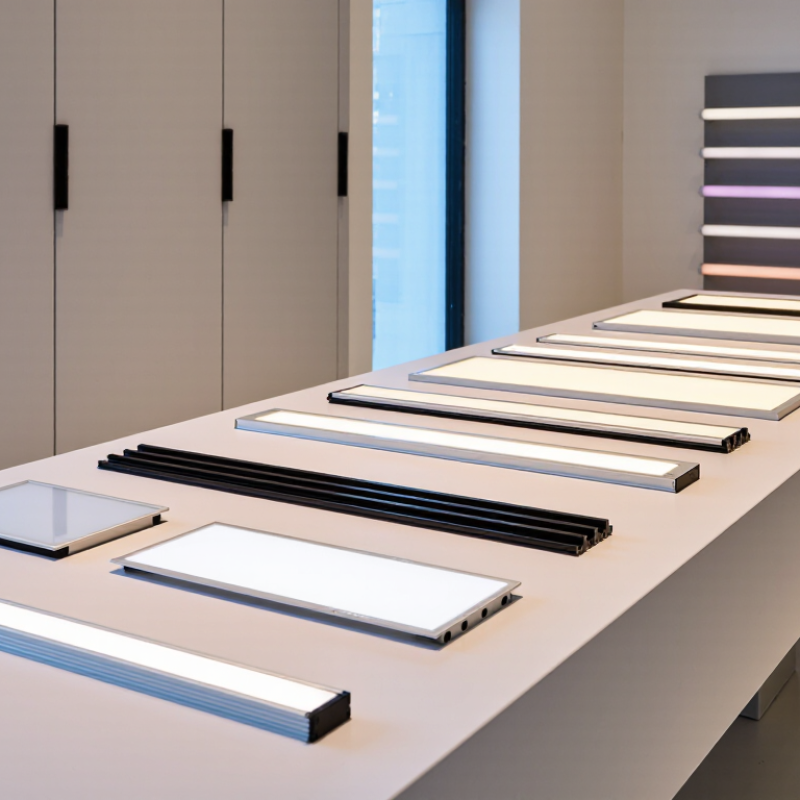
An LED linear module places multiple light-emitting diodes along a narrow circuit board. A driver converts incoming power into controlled current, while the board helps carry heat away. A lens or diffuser spreads the light into a continuous line, reducing the dotted look of exposed LEDs. Small details matter: poor heat management can shorten component life, and an unsuitable driver may cause flicker. Real installations are less tidy.
These modules suit office ceilings, retail shelves, warehouse aisles, display cases, and indirect cove lighting. Their slim shape fits narrow channels, while linked sections can create longer runs. The U.S. Department of Energy reports that LED products use at least 75% less energy and can last up to 25 times longer than incandescent lighting. That comparison is useful, but actual savings depend on controls, operating hours, and the existing system. GlobalABC’s 2023 Global Status Report estimates that buildings account for 34% of global energy demand, making efficient lighting an important design consideration. Check output, color consistency, thermal conditions, and dimming compatibility before specifying a module. The detail is easy to overlook.
10 Best LED Linear Modules for Global Buyers - How LED Linear Modules Work and Where They Are Used
| Module Type | How It Works | Typical Electrical Setup | Typical Light Output and Color | Common Applications |
|---|---|---|---|---|
| Rigid PCB Linear Module | Surface-mounted LEDs on a straight printed circuit board provide a compact, consistent line of light. | Usually 12 V or 24 V DC; approximately 5–20 W per metre. | About 500–2,000 lm per metre; commonly 2,700–6,500 K. | Cabinet lighting, display cases, coves, and compact luminaires. |
| Flexible LED Strip Module | LEDs and current-limiting components are mounted on a flexible circuit that can be cut at marked intervals. | Commonly 12 V or 24 V DC; approximately 4–20 W per metre. | About 300–2,000 lm per metre, depending on LED density and power; multiple white CCT options are available. | Indirect lighting, signage, shelves, coves, and curved surfaces. |
| High-Output Aluminum-PCB Module | LEDs are mounted on a metal-core circuit board that conducts heat toward a suitable heat sink. | Typically driven by a constant-current driver; power depends on board length and LED arrangement. | Often around 100–180 lm/W at module level; available in several white CCTs. | Linear high-bay fixtures, industrial fittings, and commercial luminaires. |
| COB Linear Module | Closely grouped LED chips create a continuous-looking emitting surface with reduced visible light dots. | Usually constant-current driven, with voltage determined by the chip string and module design. | Typically 80–150 lm/W; commonly offered with CRI 80 or CRI 90 options. | Retail displays, hospitality lighting, architectural lines, and smooth-effect downlight channels. |
| Tunable-White Linear Module | Warm-white and cool-white LED channels are mixed by a compatible controller to adjust the apparent color temperature. | Often 24 V DC or constant-current; requires a two-channel driver or controller. | Common tuning range is approximately 2,700–6,500 K; output varies with the selected mix. | Offices, classrooms, healthcare spaces, and applications that need adjustable white light. |
| RGBW Linear Module | Red, green, blue, and dedicated white LEDs are controlled separately to produce colored effects and usable white light. | Commonly 12 V or 24 V DC with a compatible multi-channel controller. | Color output depends on channel settings; the white channel typically provides a selectable fixed CCT. | Decorative coves, entertainment spaces, façades, and feature lighting. |
| Water-Resistant Encapsulated Module | A protective coating or enclosure helps reduce exposure of the LEDs and circuit to moisture and dust. | Often 12 V or 24 V DC; confirm the driver and connection method are suitable for the environment. | Output and CCT vary by design; protection ratings are model-specific and should be checked against the installation conditions. | Covered outdoor areas, kitchen task lighting, signage, and damp locations when correctly rated. |
| Lens-Equipped Linear Module | An integrated optic spreads, narrows, or redirects light to shape the beam and manage glare. | Typically constant-current or low-voltage DC, depending on the module design. | Beam distributions vary by optic; available output and CCT depend on the LEDs used. | Offices, shelves, corridors, retail displays, and luminaires requiring controlled distribution. |
| High-Density Continuous-Light Module | Closely spaced LEDs or a continuous-emitting design reduce dark gaps between light sources. | Commonly 24 V DC or constant-current; power depends on length and LED density. | Designed for visually uniform light; output ranges vary widely by construction and diffuser. | Shallow-profile channels, illuminated signs, display cases, and seamless-looking light lines. |
| Modular Linkable Linear Module | Standardized sections connect end-to-end or through wiring to create longer lighting runs. | May use a shared constant-current driver or a low-voltage DC supply; observe the specified run and current limits. | Output, CCT, and achievable run length depend on the module and power system. | Continuous cabinet runs, shelving, commercial interiors, and serviceable linear fixtures. |
How to choose: Compare the required light output, CCT, CRI, operating voltage, driver compatibility, heat management, protection rating, dimensions, and local electrical requirements. Figures are typical design ranges, not guaranteed specifications; verify the data sheet for each module.
