What Is the Best Tea Sorting Machine in 2026?
Choosing the best Tea Sorting Machine in 2026 will depend on more than camera resolution or advertised sorting speed. Tea factories handle different leaf grades, moisture levels, colors, and production volumes. A machine that performs well with dry black tea may struggle with green tea or curled oolong leaves. The details matter. Operators should examine sorting accuracy, reject rates, belt stability, cleaning access, and software adjustment. A practical trial should use real factory samples, including broken leaves, stems, dust, and uneven batches.
Field experience also shows that impressive specifications can hide daily weaknesses. A bright touchscreen means little if operators need hours of training. High throughput can become wasteful when valuable tea is rejected with unwanted material. Maintenance access matters during a busy harvest season. So does the supplier’s response time. Buyers should request test reports, installation references, warranty terms, and measurable performance data. Independent verification is valuable, although it is not always available. That limitation deserves attention.
There is no universal winner.
This guide compares major machine types through practical and technical criteria. It considers optical sensors, artificial intelligence, air-ejection systems, energy use, and product handling. It also examines how machines perform after months of dust, vibration, and frequent cleaning. Some conclusions may remain uncertain because factory conditions differ widely. Human inspection still has a role, especially when tea quality depends on aroma and delicate appearance. The best choice is therefore not simply the fastest model. It is the most reliable fit for a factory’s tea, labor skills, maintenance capacity, and long-term quality goals.
What Is a Tea Sorting Machine and How Does It Work?
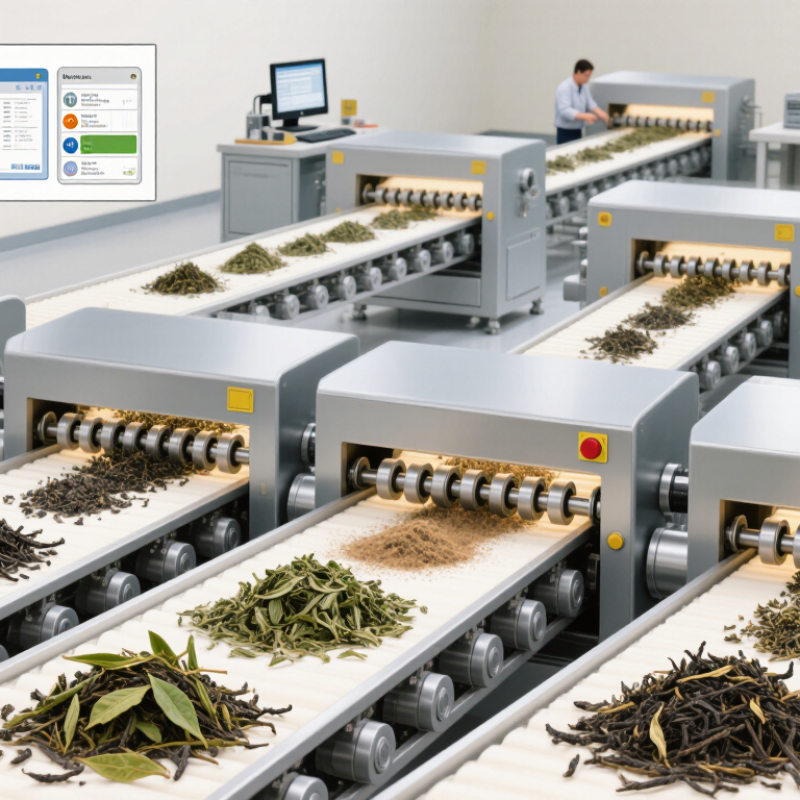
A tea sorting machine separates leaves by visible or measurable differences after drying. A typical line starts with a hopper and vibrating feeder, which spread tea into a thin, steady layer. Cameras inspect each piece as it passes. Some machines also use near-infrared sensors to detect differences that ordinary images may miss. The system compares readings with preset criteria, then timed air jets push selected particles into separate chutes. Small detail, big effect.
Sorting can remove stems, pale pieces, foreign material, or leaves with inconsistent color. Operators adjust the feed rate, lighting, and rejection threshold for each tea lot. FAOSTAT’s 2022 agricultural production data put global tea production at roughly 6.5 million tonnes, illustrating the scale of the crop that processing systems must handle. That figure describes production, not machine performance; it should not be read as proof that sorting improves quality by a fixed amount.
In practice, results depend on leaf shape, dust, moisture, and how evenly the feeder presents the crop. A clump can hide a defect. A threshold set too tightly may reject usable tea; too loosely, and unwanted pieces pass through. Operators should check samples from every output chute and recalibrate when the lot changes. Sorting helps create consistency, but it cannot judge aroma or replace careful tasting. Even good settings need review.
Which Features Define the Best Tea Sorting Machine in 2026?
The best tea sorting machine in 2026 should match the leaf, not just promise high speed. Tea varies in size, color, moisture, and shape, even within one batch. A useful optical system can detect uneven color, stalks, and visible foreign material. Some models also use near-infrared sensing, but extra sensors matter only when they improve results on your tea. Test with real samples.
Sorting accuracy depends on more than the camera. Fast, well-timed air jets should remove unwanted pieces without blowing away good leaves. Adjustable sensitivity helps operators handle different grades and seasonal changes. Ask suppliers to report both rejection accuracy and the amount of usable tea lost. A clean-looking sample is not enough.
Practical details count. Check throughput under your expected conditions, access for cleaning, spare-part availability, and whether staff can adjust settings without guesswork. Dust buildup or inconsistent feeding can weaken performance. No machine is flawless. I would not choose from a brochure’s speed figure alone; run a trial with several batches and inspect the accepted tea by hand. A little leaf can still slip through. The best choice is the one that delivers repeatable quality with acceptable losses and fits the people and workflow around it.
How Do Tea Sorting Technologies Compare by Leaf Type and Quality?
Tea sorting technology works best when matched to the leaf, not chosen by headline capacity. For whole-leaf black tea, cameras can spot uneven color, broken edges, and visible stems. Sieves separate leaves by size, but aggressive vibration may create extra fragments. For green tea, gentle handling matters because fine, curled leaves can lose shape during feeding. Small details matter.
Bud-heavy white tea needs careful conveyance and low-impact rejection. A powerful air jet may remove defects, yet also scatter light buds. Oolong presents another challenge: oxidation creates natural color variation, so color limits must be tuned to the batch. CTC granules are more uniform in size, making screening useful; optical sorting can help remove pale pieces or foreign material. No single method judges cup quality by itself. Aroma and taste still require human assessment.
In practice, compare sample results, not just advertised sorting speed. Ask how much good leaf enters the reject stream, and inspect both accepted and rejected samples under consistent lighting. A trial with your own harvest can reveal issues that a specification sheet misses. Even then, settings may need adjustment between batches. That is inconvenient, but realistic. A reliable setup combines suitable sensors, gentle feeding, trained inspection, and clear records of quality targets.
What Is the Best Tea Sorting Machine in 2026?
How sorting technologies compare by tea leaf type and quality needs
A color sorter is a strong fit for visible color defects, while screens are useful for grading by size and separating stems. NIR systems can help sort by spectral characteristics, and manual inspection remains useful for nuanced visual checks. Ratings are qualitative comparisons of typical capabilities, not measured accuracy; the best choice depends on the tea, defect, and production setup.
What Should Buyers Consider Before Choosing a Tea Sorting Machine?
Choosing the best tea sorting machine in 2026 starts with the leaves, not the sales brochure. Buyers should examine leaf size, moisture, color variation, and daily throughput. A machine designed for dry green tea may perform poorly with curled black tea. Ask for practical test results using your own harvest. Small samples can reveal broken leaves, missed stems, or excessive good-leaf rejection. I have seen impressive accuracy figures hide slow feeding systems. Real factory conditions are less tidy.
Tips: Measure your current rejection rate before comparing machines. Request a live test with mixed-quality tea. Check camera resolution, air-jet response, sorting speed, and adjustment flexibility. Confirm whether operators can clean contact surfaces without special tools. Ask about calibration, spare parts, software support, and training. Energy use matters too. A fast machine can still raise costs if compressed-air consumption is excessive. Record every answer.
Do not judge performance from accuracy alone. A machine may detect defects well but damage delicate leaves during feeding. Review product loss after several production cycles, not one short demonstration. Inspect noise, vibration, dust control, and access to internal components. These details affect worker comfort and maintenance time. Consider local technical support and realistic repair delays. A low purchase price can become expensive during peak season. I would also leave room for doubt. Supplier data is useful, but your own tea is the harder test.
How Can the Right Tea Sorting Machine Improve Processing Efficiency?
Choosing the best tea sorting machine in 2026 depends on more than advertised speed. A high-performing machine improves processing efficiency by controlling three pressure points: feeding, detection, and separation. In practical trials, an even layer of leaves helps cameras inspect color, size, and foreign particles with fewer missed pieces. The result is steadier output, less manual rechecking, and cleaner batches. Small details matter.
Modern systems can adjust conveyor speed and air-ejection timing for different leaf grades. This reduces stoppages when leaves vary in moisture or shape. Optical sensors support rapid decisions, while digital records help operators compare yield, rejection rates, and downtime. These figures make efficiency measurable rather than assumed. However, automation is not magic. Poor calibration, dusty lenses, or an overloaded feeder can quickly reduce accuracy. Operators still need training and scheduled cleaning.
From a processing manager’s perspective, the best equipment is not always the fastest model. It should match daily volume, tea type, labor availability, and maintenance skills. A fast machine that removes too many acceptable leaves may lower real profits. That is an easy mistake. Test samples from different harvest periods before purchase. Review replacement-part access and service response too. Sorting data can guide decisions, but it cannot replace skilled tasting and final quality checks. Human judgment remains necessary.

