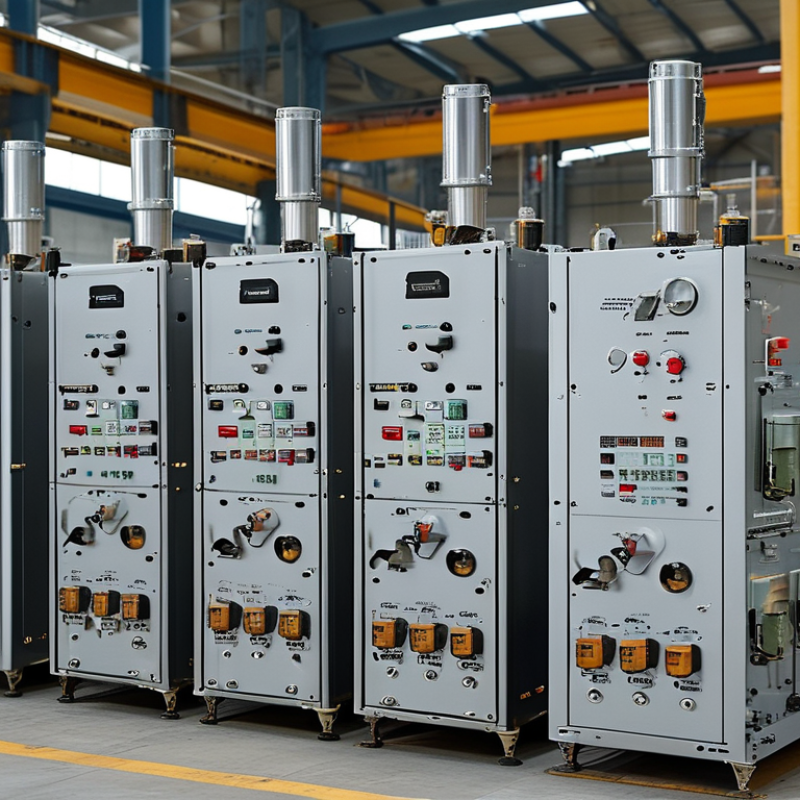
China Best Three Phase Chrome Rectifier Suppliers?

China has become a major sourcing base for industrial electroplating power systems, including three phase chrome rectifiers. However, supplier quality is not uniform. Quality varies.

Grand View Research identifies electroplating as a growing industrial market, supported by automotive, aerospace, machinery, and electronics manufacturing. Its market analysis also highlights rising demand for controlled current, energy efficiency, and process consistency. These trends make rectifier selection more technical than a simple price comparison.

A reliable three phase chrome rectifier should provide stable DC output, low ripple, accurate voltage adjustment, and practical thermal protection. Buyers should also examine transformer design, diode or IGBT architecture, cooling performance, control-panel usability, and replacement-part availability. During factory evaluation, the details matter: copper busbars should be firmly secured, cable terminals should remain cool, and the cabinet should not show excessive vibration under load.

The IEC 60146 series provides recognized guidance for semiconductor power converters, while ISO 9001 certification can indicate a controlled quality-management process. Neither document proves complete product reliability. Real testing is still necessary.

A capable Chinese supplier should offer load-test records, wiring diagrams, efficiency data, warranty terms, and application references. It should also explain how its unit responds to a Phase Lack Chrome Rectifier fault, rather than hiding behind generic specifications. This point is often overlooked.

Supplier comparisons should include factory experience, engineering support, customization ability, and export service. Some manufacturers present impressive catalogs but provide limited technical evidence. That is where buyers must remain cautious. A structured review can reveal the best match for chrome plating lines, but the “best” supplier depends on current range, bath configuration, duty cycle, installation conditions, and after-sales expectations.

China Best Three Phase Chrome Rectifier Suppliers?

Three-Phase Chrome Rectifier Basics: 6-Pulse and 12-Pulse Topologies

When evaluating China-based three-phase chrome rectifier suppliers, understand the pulse topology before comparing prices. A six-pulse rectifier uses one three-phase bridge and produces six current pulses per cycle. At 50 Hz, ripple appears near 300 Hz. At 60 Hz, it approaches 360 Hz. This design is compact, proven, and suitable for many standard chrome plating lines. However, its ripple can affect deposit brightness and thickness when process control is demanding.

A twelve-pulse rectifier combines two six-pulse bridges through a phase-shifting transformer. Ripple frequency doubles, reaching about 600 Hz at 50 Hz input. It usually reduces harmonics and output fluctuation. The transformer adds weight, cost, and maintenance points. A 12-pulse unit is not automatically better. Poor phase-shift accuracy can weaken its real advantage. Reliable suppliers should provide measured current stability, cooling calculations, transformer data, and test records under rated load.

Tips: Ask for a factory load test, not only catalog figures. Check output voltage reserve, current-sharing performance, busbar temperature, and enclosure protection. Confirm whether control feedback measures actual plating current. Request waveform data with your intended bath load. A supplier may quote impressive ripple figures, yet omit the measurement conditions. That deserves a second question. Also inspect service access, spare-part availability, and commissioning support before selecting a rectifier for continuous chrome production.

Key Specifications: 10–100 kA Output, ≤5% Ripple, and 90–95% Efficiency

China Best Three Phase Chrome Rectifier Suppliers?

Key Specifications: 10–100 kA Output, ≤5% Ripple, and 90–95% Efficiency

Choosing a three-phase chrome rectifier requires more than comparing maximum amperage. A reliable supplier should offer stable output from 10 to 100 kA, with voltage matched to the plating line. Low ripple, ideally at or below 5%, supports a smoother deposit and more consistent surface appearance. Ripple figures should be tested under actual load, not only at laboratory conditions.

Efficiency between 90% and 95% can reduce heat, electricity use, and cooling demand. Ask for measured efficiency at 25%, 50%, and full load. This detail matters because a unit may perform well at full capacity but waste energy during smaller production runs. Forced-air or water cooling should include temperature alarms and clear maintenance access. Small details matter.

Experienced buyers should inspect control response, busbar construction, insulation, and protection against overload, short circuits, and sudden voltage changes. A supplier should provide factory test records, calibration data, wiring diagrams, and service guidance. Remote monitoring is useful when several rectifiers operate together, but communication faults still need local controls. A polished datasheet is not proof of field reliability. Request load-test videos, customer references, and spare-parts availability before installation. In practice, the best specification can still disappoint when ventilation, cable sizing, or operator training receives too little attention.

China Best Three Phase Chrome Rectifier Suppliers? – Key Specifications

Reference specification envelope for three-phase chrome-plating rectifiers: 10–100 kA output current, ≤5% ripple, and 90–95% efficiency. The chart uses separate scales so each parameter is shown in its proper unit.

The minimum and maximum values represent commonly specified performance boundaries for high-current industrial chrome-plating rectifiers. Actual performance depends on operating load, cooling system, control method, and installation conditions.

China Supplier Evaluation: IGBT Control, Cooling Systems, and Customization

China’s chrome rectifier suppliers deserve evaluation beyond output voltage and current. IGBT control can improve switching response, power factor, and ripple management. However, claimed efficiency must be tested at your actual load. MarketsandMarkets’ 2024 Power Electronics Market report forecasts continued strong growth, driven by efficient industrial conversion systems. That trend raises expectations, but it does not guarantee every supplier’s design quality. Ask for factory test records, thermal curves, ripple readings, and IEC 60146-1-1 compliance evidence.

Cooling deserves equal attention. Air-cooled cabinets may suit moderate loads and clean workshops. Water-cooled systems can manage heavier continuous duty, but pumps, filters, and leak protection require maintenance. Grand View Research’s 2024 electroplating analysis estimates steady global market growth through 2030, increasing demand for stable chrome plating power. Still, a larger cabinet is not automatically better. Check busbar temperature, fan redundancy, enclosure protection, and noise levels. A supplier may meet the drawing yet miss your production rhythm.

Tips: Request a 24-hour load test using your real bath conditions. Confirm IGBT module origin, spare-part availability, and control-panel language. Compare ripple at low, medium, and full load. Also test recovery after sudden load changes. Customization should include cable length, cooling method, remote monitoring, and safety interlocks. Do not accept “high efficiency” without test conditions. That detail is often overlooked.

Quality and Safety Benchmarks: IEC 60146, CE Compliance, and Load Testing

China Best Three Phase Chrome Rectifier Suppliers?

Quality and Safety Benchmarks: IEC 60146, CE Compliance, and Load Testing

Choosing a three-phase chrome rectifier supplier requires more than comparing output current. IEC 60146-1-1 defines essential requirements for semiconductor power converters, including rated conditions, protection, and operating performance. A reliable supplier should provide test records for voltage stability, current accuracy, insulation resistance, and cooling performance. Small details matter. Loose busbar connections can create visible heat marks after extended operation.

CE compliance also needs careful checking. CE marking confirms conformity with applicable European requirements; it does not prove superior rectifier performance. Buyers should request the EU Declaration of Conformity, risk assessment, circuit diagrams, and relevant test reports. EMC evidence is especially important in plating workshops, where switching equipment and long output cables may increase electrical noise. The IEA’s Electricity 2024 report forecast global electricity demand growth of about 4% annually from 2024 through 2026, reinforcing the need for efficient and dependable power conversion equipment.

Load testing separates experienced suppliers from document-only sellers. The rectifier should operate under rated load while engineers record output ripple, cabinet temperature, fan performance, and protection response. A practical test may run continuously until thermal readings stabilize, followed by overload and short-circuit protection checks. Test it hot. Cold tests can mislead. Suppliers should preserve raw data, not only provide a pass certificate. One weakness remains: factory testing may not reproduce the customer’s water temperature, cable length, or plating cycle. Clear site conditions and commissioning records are therefore essential.

China Best Three Phase Chrome Rectifier Suppliers? - Quality and Safety Benchmarks: IEC 60146, CE Compliance, and Load Testing
Benchmark Category Evaluation Dimension Quality or Safety Benchmark Objective Evidence to Request Recommended Acceptance Method Assessment Status
Electrical Design Three-phase AC input Input voltage, frequency, phase sequence, short-circuit protection, and permissible tolerance shall be clearly stated on the technical datasheet and nameplate. Approved datasheet, wiring diagram, nameplate photograph, input protection specification, and rated-current calculation. Confirm that the proposed input configuration matches the installation power system before order placement. Required
Rectifier Performance DC output voltage and current Rated DC voltage and current shall be defined together with regulation accuracy, ripple, duty cycle, and operating temperature range. Factory test report showing measured output voltage, output current, regulation result, ripple measurement method, and ambient temperature. Compare measured values with the purchase specification at no-load, half-load, and rated-load conditions. Required
IEC 60146 Power semiconductor converter requirements IEC 60146-1-1 addresses general requirements and line-commutated converters, including ratings, service conditions, performance, and testing principles. It should be applied to the relevant converter design rather than treated as a complete product-safety approval. IEC 60146-1-1 conformity statement, clause-by-clause compliance matrix, design calculations, and routine test records. Check that the declared edition and applicable clauses correspond to the actual rectifier topology and rated operating conditions. Verify Scope
CE Compliance European market conformity CE marking is a manufacturer declaration of conformity with applicable European Union legislation; it is not itself a product test standard. The applicable directives and harmonised standards depend on the final configuration and intended use. EU Declaration of Conformity, technical file index, risk assessment, product label, and applicable EMC and electrical-safety test reports. Verify the legal entity issuing the declaration, product model coverage, applicable directives, standards, and declaration date. Required for EU Sales
EMC Conducted and radiated disturbance The rectifier should be evaluated for electromagnetic emissions and immunity according to the EMC requirements applicable to its installation environment and control system. EMC laboratory report covering the complete rectifier, controller, fan, enclosure, cables, filters, and representative load. Confirm test configuration, cable lengths, grounding method, operating load, and pass limits rather than accepting a generic component report. Required
Electrical Safety Protection against electric shock and abnormal operation Design should include protective earthing, touch-safe barriers, insulation coordination, overcurrent protection, emergency isolation, and protection against overtemperature. Risk assessment, protective-earth continuity test, insulation-resistance test, dielectric-strength test, and control-circuit safety documentation. Perform witnessed routine tests on a production unit and inspect enclosure access, interlocks, terminals, and protective bonding. Required
Load Testing Continuous rated-load operation A practical buyer acceptance benchmark is stable operation at 100% rated DC current for an agreed duration, commonly 4 to 8 hours, with no protective trip, abnormal noise, overheating, or visible damage. Time-stamped load-test log showing DC voltage, DC current, heatsink temperature, ambient temperature, alarms, and shutdown events. Use a calibrated electronic load or production-equivalent plating load; define allowable temperature rise and output tolerance in the purchase contract. Recommended Acceptance Test
Overload Protection Short circuit and current limiting The unit should limit or safely interrupt excessive current without unsafe component failure, uncontrolled output, or loss of protective functions. Protection-circuit description, fault test record, semiconductor protection data, fuse or breaker coordination, and alarm history. Conduct controlled tests at reduced energy where possible and follow the manufacturer’s documented safety procedure. Required
Thermal Management Cooling and temperature rise Forced-air or liquid-cooling requirements shall be specified, including airflow or coolant conditions, fan status monitoring, ambient temperature, and derating limits. Thermal calculation, cooling-system specification, fan-failure alarm test, temperature records, and derating curve. Repeat the rated-load test at the stated maximum ambient condition or at the agreed simulated condition. Required
Output Ripple Ripple suitability for chromium plating Ripple performance must be specified using a defined measurement bandwidth, load condition, and measurement point. For a six-pulse line-frequency bridge, characteristic ripple occurs at six times the AC supply frequency: 300 Hz at 50 Hz input or 360 Hz at 60 Hz input. Oscilloscope or calibrated power-analyser records showing waveform, peak-to-peak ripple, RMS ripple, bandwidth, and load condition. Evaluate ripple against the plating process requirement rather than using an unspecified percentage or a no-load measurement. Process-Specific
Control Response Current and voltage regulation Current-control accuracy, voltage-control accuracy, soft start, output ramp rate, remote-control interface, and response to load changes shall be defined before purchase. Control specification, calibration certificate, step-load response record, PLC or analog-interface description, and alarm list. Apply repeatable load changes and confirm that the controller returns to the specified setpoint without excessive overshoot or oscillation. Recommended
Manufacturing Quality Traceability and routine testing Each production unit should have a unique serial number and traceable records for critical components, calibration, assembly inspection, and final electrical testing. Serial-number record, inspection checklist, calibration certificates, bill-of-materials revision, and final inspection report. Audit a sample of production records and confirm that the delivered unit matches the approved drawings and bill of materials. Recommended
Documentation Installation and maintenance information Documentation should include installation clearances, cable sizing, earthing, cooling requirements, operating limits, alarm codes, maintenance intervals, and safe isolation procedures. English installation manual, operation manual, maintenance schedule, schematic, spare-parts list, and commissioning checklist. Review documents before shipment and require controlled revisions for all safety-critical changes. Required
Supplier Qualification Pre-shipment inspection The purchaser should be able to witness or independently verify nameplate data, dimensions, insulation tests, protective-earth continuity, output calibration, alarms, and load performance. Approved inspection and test plan, factory acceptance test procedure, calibrated instrument list, and signed test report. Release shipment only after all contractual acceptance criteria are passed and deviations are formally approved. Required
Safety Note Interpretation of certificates IEC references, CE documents, and laboratory reports should identify the exact model, rating, configuration, and tested accessories. A certificate for a controller or component alone does not automatically certify the complete rectifier. Model-specific certificates, test reports, declaration documents, photographs of markings, and configuration list. Reject incomplete, mismatched, expired, or unverifiable documents and request clarification before technical approval. Document Review

Best-Supplier Selection: Compare Capacity, Warranty, Lead Time, and Service

China Best Three Phase Chrome Rectifier Suppliers?

Selecting a three-phase chrome rectifier requires more than comparing online prices. Start with capacity: check rated current, output voltage, duty cycle, and cooling performance. A unit rated for 1,000 amps may not sustain that load continuously. Ask for test records, efficiency data, and enclosure details. In practice, I prefer suppliers that explain their calculations clearly, not those offering vague “high-power” claims. This small distinction can prevent costly production interruptions.

Warranty terms reveal the supplier’s confidence and reliability. Confirm coverage for power modules, control boards, transformers, and cooling components. Request the warranty period, response time, and repair process in writing. Lead time also needs careful checking. Ask whether components are stocked, custom-built, or imported. A short promise may become a long delay when specifications change. I have seen schedules fail because shipping preparation was discussed too late.

Tips: Compare at least three written quotations with identical specifications. Request a factory video, recent inspection report, and sample test data. Check service availability across time zones, spare-parts access, installation guidance, and remote troubleshooting. Ask who handles technical support after payment. A supplier with strong engineering support may offer better value than the cheapest option. Still, do not assume every document proves performance; independent verification is wiser. Shortcuts are tempting. Careful questioning usually saves more.

Scroll to Top