
What Is Computer Graphic Animation and How Does It Work?
Computer Graphic Animation turns mathematical models, drawings, and captured movement into images that appear to live. It shapes films, games, medical simulations, product demonstrations, and virtual production. Yet the magic is not created by software alone. Artists define motion, designers build visual language, and technical directors solve difficult production problems. John Lasseter, Pixar co-founder and animator, captured this relationship: “The art challenges the technology, and the technology inspires the art.”
This article explains how Computer Graphic Animation works from concept to final frame. A team begins with storyboards, character designs, and timing references. Modelers create three-dimensional forms, while riggers add digital joints and controls. Animators then pose characters or guide simulated motion frame by frame. Lighting artists place virtual sources, and rendering engines calculate color, shadows, reflections, and depth. Modern systems may use real-time GPUs, motion capture, physics engines, or machine-learning assistance. Each tool changes the workflow, but none removes creative judgment.
A convincing result depends on weight, spacing, facial expression, and believable interaction with light. Small errors matter. A foot may slide, a hand may pass through a prop, or a shadow may feel detached. These flaws reveal an important truth: technical accuracy does not guarantee emotional credibility. Production teams often find that reviewing rough passes early prevents expensive revisions later. Still, every pipeline has limits, and simplified animation can sometimes communicate better than flawless detail. Readers will examine the process, strengths, compromises, and unanswered questions behind moving digital images. The goal is practical understanding, not blind admiration.
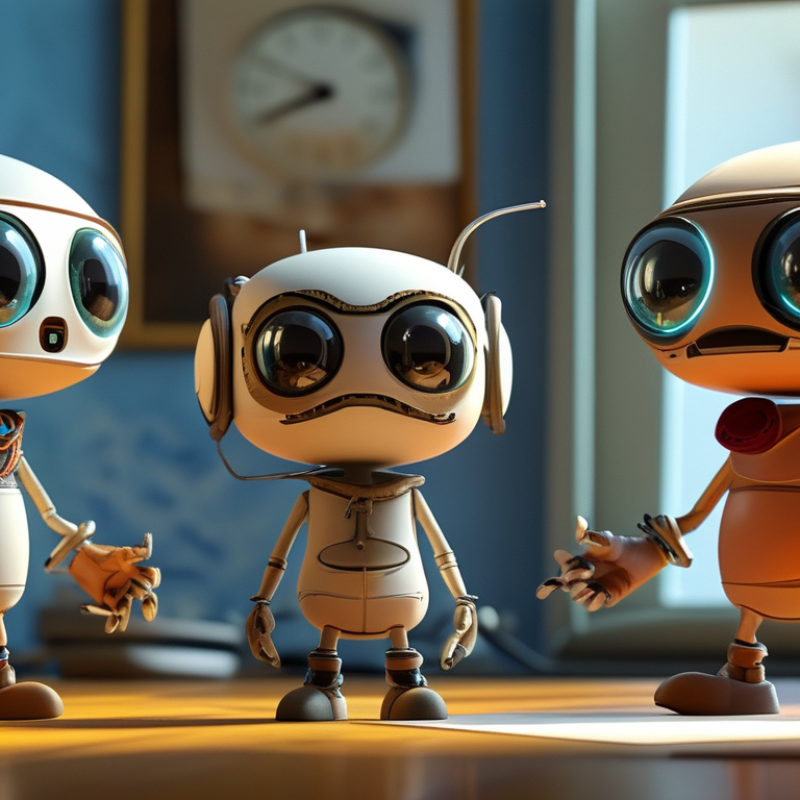
Definition and Core Principles of Computer Graphic Animation
Computer graphic animation creates moving images with digital geometry, pixels, and calculated time. It can be two-dimensional, three-dimensional, or a hybrid of both. Unlike traditional frame-by-frame drawing, software stores objects as data. Artists can then change position, scale, color, lighting, or motion without rebuilding every image.
Its core principles begin with keyframes. An animator sets important poses, such as a character’s raised hand and lowered hand. Interpolation generates the movement between them. Timing controls speed, while spacing shapes weight and emotion. A rig acts like a digital skeleton. It connects controls to joints, facial features, and flexible surfaces. In 3D work, cameras define viewpoint, and lighting creates depth. Rendering converts the scene into finished frames, often after compositing layers for shadows, effects, and color correction.
The commercial value is substantial. Grand View Research estimated the global 3D animation market at about 19.5 billion U.S. dollars in 2022, with an 11.7% compound annual growth forecast from 2023 to 2030.
The U.S. Bureau of Labor Statistics projects 8% employment growth for special effects artists and animators between 2022 and 2032, with roughly 9,600 openings annually.
These figures are useful, but not perfectly comparable. Reports define “animation” differently, and market forecasts can shift quickly.
A technically beautiful sequence may still fail if motion lacks believable timing. That remains an easy mistake.

Key Components: Models, Scenes, Motion, Lighting, and Rendering
What Is Computer Graphic Animation and How Does It Work?
Computer graphic animation creates moving images from digital objects, environments, and timed visual changes. A model defines an object’s shape, such as a chair, robot, or leaf. Artists build these forms with surfaces, edges, and small details. A scene places models inside a designed space. It also controls the camera, background, scale, and depth.
Motion gives the scene life. Animators change an object’s position, rotation, or size across specific frames. Software calculates the movement between those points. This process can create a bouncing ball, a walking character, or a slowly opening door. Lighting affects how viewers read the scene. A soft light may reveal gentle curves, while a narrow light creates stronger shadows. Rendering converts all these instructions into visible frames. It calculates color, texture, reflections, shadows, and camera perspective. A single frame may require considerable processing.
Tips: Keep models simple while testing motion. Check the camera from several angles. Use clear lighting before adding complex effects. Small timing changes can make movement feel heavy or weightless. I often notice that technically correct animation still feels stiff. That usually means the motion lacks pauses, uneven timing, or a convincing reaction. Test short sequences repeatedly. Review them at normal speed, then frame by frame. Some details may look impressive but distract from the action. Reliable results come from careful observation, practical testing, and a willingness to revise.
How Computer Graphic Animation Is Created Step by Step
Computer graphic animation turns digital models, drawings, and motion data into moving images. The process begins with an idea, a short script, and reference material. Artists sketch key poses and plan camera angles before building anything. This preparation prevents expensive changes later, although plans often change during production.
A modeler creates the character, room, or object in three dimensions. They shape surfaces around a simple digital skeleton. A technical artist then adds joints, controls, and movement limits. Animators pose the model frame by frame, using keyframes to define major actions. Software fills the movement between these poses, but automatic results can look stiff. Skilled animators adjust timing, weight, and facial motion by watching the scene repeatedly. A hand reaching for a cup should slow near the handle, not move like a machine.
Lighting gives the scene depth and directs attention. Artists place virtual lights, adjust materials, and test shadows on the floor. The computer then renders each frame, sometimes requiring many hours for detailed scenes. Compositing combines rendered layers, backgrounds, effects, and color adjustments. Editors inspect edges, flickering shadows, and unnatural motion before adding sound. In practice, small errors survive several reviews. I have found that a slightly uneven movement can feel more believable than perfect symmetry, but it may also distract viewers. Careful testing, clear documentation, and repeated human judgment keep the final animation reliable.
Animation Techniques, Tools, and Production Workflows
Computer graphic animation transforms digital models into controlled movement. Its workflow begins with an idea, script, and visual plan. Storyboards establish camera angles, timing, and emotional direction. A production team then builds models, materials, and environments around those decisions.
Animation techniques shape the motion. Keyframe animation places important poses on a timeline, while the software creates connecting frames. Motion capture records human movement, but cleanup remains necessary. Procedural animation can generate repeated actions, such as swaying grass or falling particles. Simulations handle cloth, smoke, water, and collisions. They can save time. They can also behave unpredictably.
Tools support each production stage. Modeling tools create geometry, rigging tools add digital joints, and animation tools control poses. Lighting systems define shadows, reflections, and color relationships. Rendering converts the scene into individual images, often at 24 or 30 frames per second. Compositing combines these images with effects and corrections. I recommend small render tests before final output. They reveal broken textures, sliding feet, harsh shadows, and timing problems early. Clear file names and version records prevent expensive confusion. A technically correct scene can still feel lifeless. My early animations often used too many details and too little rhythm. That mistake taught me to judge movement from a distance, not only through polished close-ups. Realistic motion is not always convincing motion.
Applications and Emerging Developments in Computer Graphic Animation
What Is Computer Graphic Animation and How Does It Work?
Computer graphic animation turns digital models into moving images. Artists shape objects, build skeletons, set keyframes, add materials, and render each frame. A facial rig may control a blink, while lighting creates a soft reflection on a glass surface. The process supports films, games, medical training, architectural previews, and interactive learning. It is not only entertainment. A well-designed simulation can help trainees practise safely before using real equipment.
Applications are expanding through real-time rendering and procedural workflows. Grand View Research estimated the global 3D animation market at about 20.6 billion dollars in 2022, with strong growth forecast through 2030. That growth reflects wider demand for immersive product demonstrations and virtual environments. In healthcare, animated organs can clarify difficult procedures. In education, a rotating engine can reveal hidden mechanical movement. Small details matter.
Emerging tools now generate motion, textures, and environments from limited instructions. An Animation Guild and CVL Economics report projected that 21.4% of film, television, and animation jobs could be affected by generative AI by 2026. The figure deserves caution. Automation may remove repetitive tasks, but it cannot reliably judge cultural meaning, emotional timing, or visual ethics. Human review remains essential. Some generated movements still look physically wrong. A hand may grip an object without believable pressure. Real-time systems also demand expensive hardware and careful data management. Progress is visible, but unfinished.
What Is Computer Graphic Animation and How Does It Work? — Applications and Emerging Developments in Computer Graphic Animation
| Animation Area | How It Works | Primary Data or Input | Typical Output | Established Applications | Emerging Development | Key Technical Fact |
|---|---|---|---|---|---|---|
| 2D Computer Animation | Objects are represented as points, lines, curves, layers, or raster images and are changed over time by keyframes or procedural rules. | Coordinates, drawings, vector paths, images, timing data, and transparency values. | Flat illustrations, motion graphics, interface animations, and animated text. | Education, advertising, user interfaces, digital publishing, and entertainment. | Automated in-betweening, physically based 2D effects, and interactive vector animation. | A keyframe defines an important state; intermediate frames can be calculated by interpolation. |
| 3D Character Animation | A digital model is controlled by a hierarchical skeleton, while skinning algorithms deform the surface around the bones. | Meshes, joints, weights, poses, keyframes, and camera parameters. | Rendered characters, creatures, vehicles, and digital environments. | Film, television, games, architectural visualization, and training simulations. | Machine-assisted pose generation, neural motion synthesis, and physically constrained character control. | Skeletal animation separates motion controls from the polygon mesh and supports reusable poses. |
| Motion Capture | Body or facial movement is recorded by sensors or cameras and mapped to a digital character or animated object. | Marker positions, inertial measurements, video frames, facial landmarks, and timestamps. | Motion curves, skeletal poses, facial animation, and performance-driven sequences. | Character production, sports analysis, rehabilitation, biomechanics, and human-computer interaction. | Markerless capture, real-time tracking, multi-person reconstruction, and improved occlusion handling. | Captured motion normally requires cleanup, retargeting, and scale or coordinate-system correction. |
| Physics-Based Animation | Motion is calculated from physical laws, constraints, collisions, and material properties rather than being authored entirely by hand. | Mass, velocity, force, gravity, friction, collision geometry, stiffness, and damping. | Rigid-body motion, cloth, smoke, fire, fluids, destruction, and particle effects. | Visual effects, engineering visualization, robotics, games, and scientific modeling. | Faster solvers, differentiable simulation, hybrid procedural methods, and neural surrogates. | Smaller simulation time steps generally improve numerical stability but increase computation. |
| Scientific Visualization | Numerical data is converted into geometry, color, transparency, volume, or animated changes that reveal patterns over time. | Scalar fields, vector fields, volumetric grids, particle positions, and time-series measurements. | Volume renderings, streamlines, surface plots, particle animations, and anatomical models. | Weather analysis, medicine, astronomy, fluid dynamics, and earth science. | In-situ visualization, immersive analysis, uncertainty visualization, and interactive digital twins. | Color maps and transfer functions determine how numerical values are translated into visible features. |
| Real-Time Rendering | Images are generated continuously while the scene, camera, lighting, or user input changes. | Scene graphs, meshes, textures, lights, materials, camera position, and interaction events. | Interactive 3D scenes, simulations, virtual environments, and responsive visual effects. | Games, training, product visualization, digital twins, and interactive media. | Hardware ray tracing, neural rendering, dynamic global illumination, and foveated rendering. | At 60 frames per second, a real-time system has approximately 16.7 milliseconds to produce each frame. |
| Augmented and Virtual Reality | Animated computer graphics are aligned with a tracked viewpoint or displayed inside an immersive stereoscopic environment. | Camera images, head pose, device orientation, spatial maps, hand positions, and 3D assets. | Overlaid instructions, spatial interfaces, virtual environments, and animated objects anchored to space. | Training, maintenance, medicine, education, visualization, and immersive entertainment. | Inside-out tracking, hand and eye interaction, spatial audio, passthrough environments, and scene understanding. | Low motion-to-photon latency is important because delays can reduce visual stability and user comfort. |
| Procedural Animation | Algorithms generate motion or visual detail from rules, parameters, noise functions, and relationships between objects. | Seeds, parameters, constraints, grammars, noise fields, and environmental conditions. | Plants, crowds, landscapes, particle systems, repetitive motion, and reactive effects. | Large environments, crowd scenes, natural phenomena, data-driven graphics, and simulation. | Adaptive procedural systems, agent-based behavior, and hybrid systems combining rules with learned models. | A fixed random seed can make a procedural result reproducible while still allowing controlled variation. |
| Facial Animation | Facial landmarks, blend shapes, muscle systems, or performance recordings drive changes in a digital face. | Landmark coordinates, expression weights, audio, video frames, and head orientation. | Expressions, lip synchronization, eye motion, and emotionally responsive avatars. | Character animation, virtual assistants, accessibility tools, telepresence, and education. | Audio-to-face generation, expression transfer, personalized avatars, and real-time neural reconstruction. | Lip synchronization can be driven by phoneme timing, viseme targets, or direct audio-conditioned motion. |
| Generative Animation | Machine-learning models infer or synthesize frames, motion, scenes, or transformations from examples and user instructions. | Text prompts, reference images, video sequences, pose data, masks, and conditioning signals. | Short animated clips, style transfers, in-between frames, motion variations, and synthetic scenes. | Concept development, previsualization, training content, visual experimentation, and accessibility. | Controllable video generation, temporal consistency, editable motion, provenance tracking, and human-guided workflows. | Temporal consistency remains a central technical challenge because each generated frame must remain coherent with adjacent frames. |
| Digital Twins and Simulation | A virtual representation is updated with data from a physical or operational system and can display predicted states over time. | Sensor readings, geometry, maintenance records, physical parameters, and operational time series. | Animated equipment states, process flows, predictive scenarios, and interactive 3D models. | Manufacturing, infrastructure, logistics, energy systems, and healthcare planning. | Real-time synchronization, multi-physics models, predictive analytics, and immersive control rooms. | A useful digital twin requires a defined connection between the virtual model and the physical or operational system it represents. |

