What is a control panel and how does it work?
Control panels are vital components in various systems. They serve as the interface for users to interact with machines or processes. Understanding how control panels work can enhance both efficiency and safety.
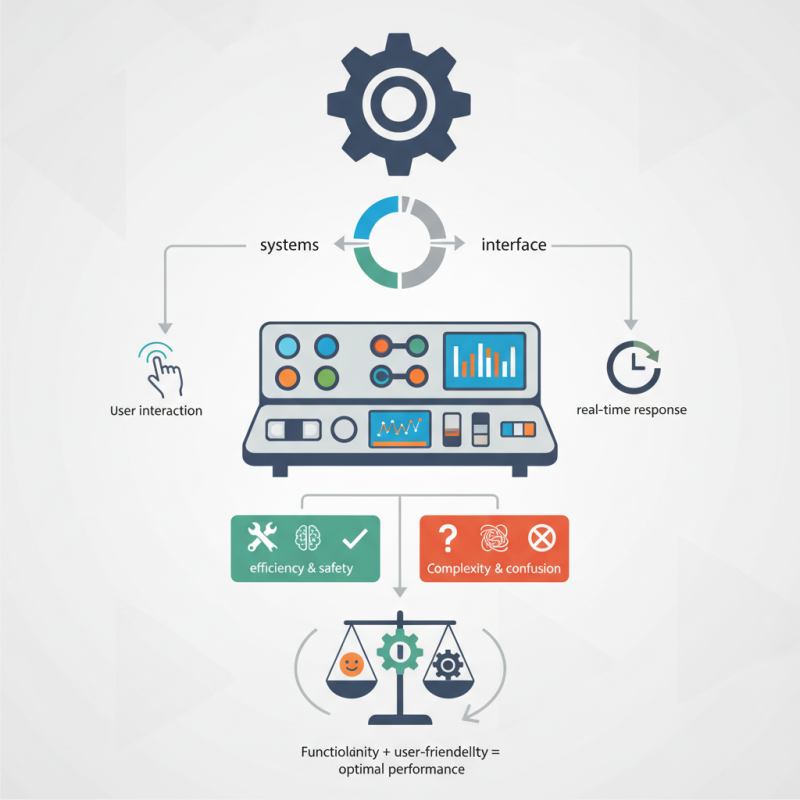
Control panels often integrate switches, buttons, and display screens. Users can monitor system status or adjust settings easily. This interaction allows for real-time responses, crucial in industrial applications. However, the complexity of some control panels can create confusion for operators.
Even with their importance, challenges remain. Improper training can lead to errors. Sometimes, control panels may not provide clear feedback. Continuous improvement is necessary to ensure their effectiveness. Ultimately, control panels must balance functionality and user-friendliness for optimal performance.
What is a Control Panel?
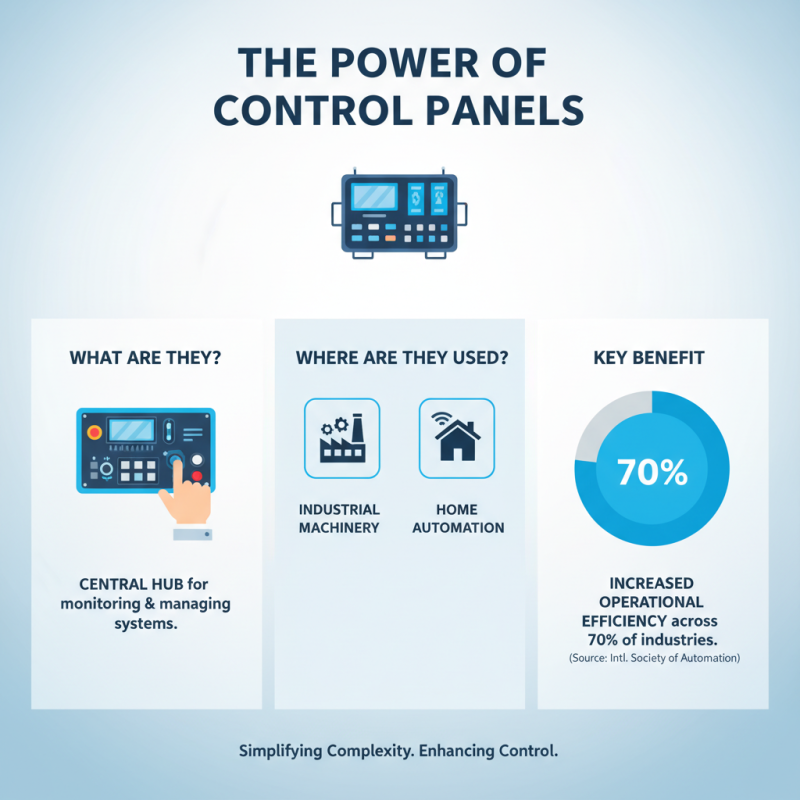
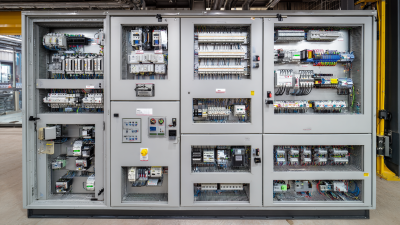
A control panel is a vital interface in various systems, from industrial machinery to home automation. It serves as the central hub for monitoring and managing equipment. Typically, it features buttons, switches, and displays that provide real-time data. According to a recent report by the International Society of Automation, 70% of industries utilize control panels to enhance operational efficiency.
In industrial settings, control panels enable users to track processes closely. They facilitate quick adjustments to parameters, improving safety and productivity. The panel’s design is crucial; operators must interact with it seamlessly. However, many users find complexities in navigation. This can lead to errors. Research by the National Institute of Standards and Technology indicates that poor interface design may reduce efficiency by up to 40%.
Home control panels are becoming increasingly popular. They allow users to manage lighting, climate, and security systems from one location. Yet, these systems can sometimes be overwhelming. Users often struggle to configure settings. A study from the Home Automation Industry showed that 68% of users faced difficulties initially. This highlights the need for clearer instructions and user-friendly designs in control panels.
Components of a Control Panel
A control panel is a crucial element in many systems. It serves as the interface for managing and monitoring various functions. The components of a control panel play specific roles, ensuring everything operates smoothly.
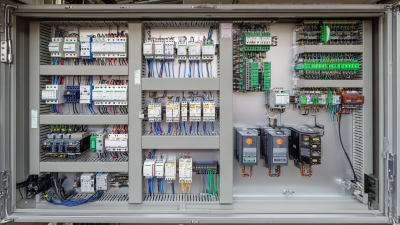
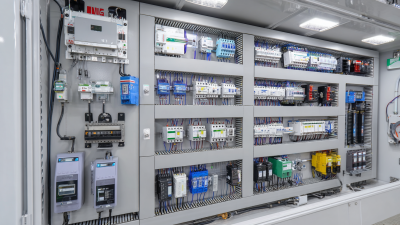
One key component is the power supply. It powers other elements. Without it, the panel is useless. Next, the controllers are essential. They process inputs and outputs. Each controller can handle different tasks. Operators use switches and buttons for manual control. These components need to be user-friendly. Confusing layouts can lead to errors.
Another vital part is the display. It shows real-time data. Operators rely on it for monitoring. Poor visibility can hinder performance. Additionally, safety devices are crucial. They prevent accidents and protect users. Regular maintenance is vital for all components. Neglect can lead to failures, which costs time and money. These aspects highlight the importance of thoughtful design. Adjustments might be necessary to improve functionality.
What is a control panel and how does it work? - Components of a Control Panel
| Component |
Description |
Function |
| Power Supply |
Provides the necessary electrical power for the system |
Converts the input power from the source to the required voltage and current |
| Circuit Breaker |
Protects the electrical circuit from overload or short circuits |
Disables the circuit when fault conditions are detected |
| Control Relay |
Electromechanical switch that opens and closes circuits |
Allows control of high-power devices via low-power signals |
| Programmable Logic Controller (PLC) |
Digital computer used for automation of electromechanical processes |
Processes input signals and controls outputs based on pre-programmed logic |
| Human-Machine Interface (HMI) |
Interface that allows human operators to interact with the machine system |
Displays data and allows user controls to manage the system |
| Fuses |
Safety device that interrupts the flow of electricity in the event of overload |
Prevents circuit damage by breaking the circuit when the current exceeds safe levels |
How Control Panels Function: Basic Principles
Control panels are essential components in many systems. They guide and manage various processes, from machinery to home automation. A control panel typically contains switches, buttons, and gauges. These elements allow users to monitor and adjust the functions of a machine or system.
How do control panels function? They operate based on a set of basic principles. Signals are processed through the control mechanisms. Sensors gather data and relay it to the panel. Users interact with the panel using physical buttons or a digital interface. Feedback from the system ensures adjustments are accurate. When you press a button, it sends a command that activates a specific action.
These interactions may seem straightforward. However, they can lead to complications. Miscommunication between sensors and the control panel could happen. Faulty sensors may provide incorrect data. This can result in malfunctioning systems. The balance between user input and system response requires constant fine-tuning. Not every layout is intuitive, and mistakes can lead to frustration. Keeping the control panel user-friendly is a crucial, ongoing challenge.
Types of Control Panels and Their Applications
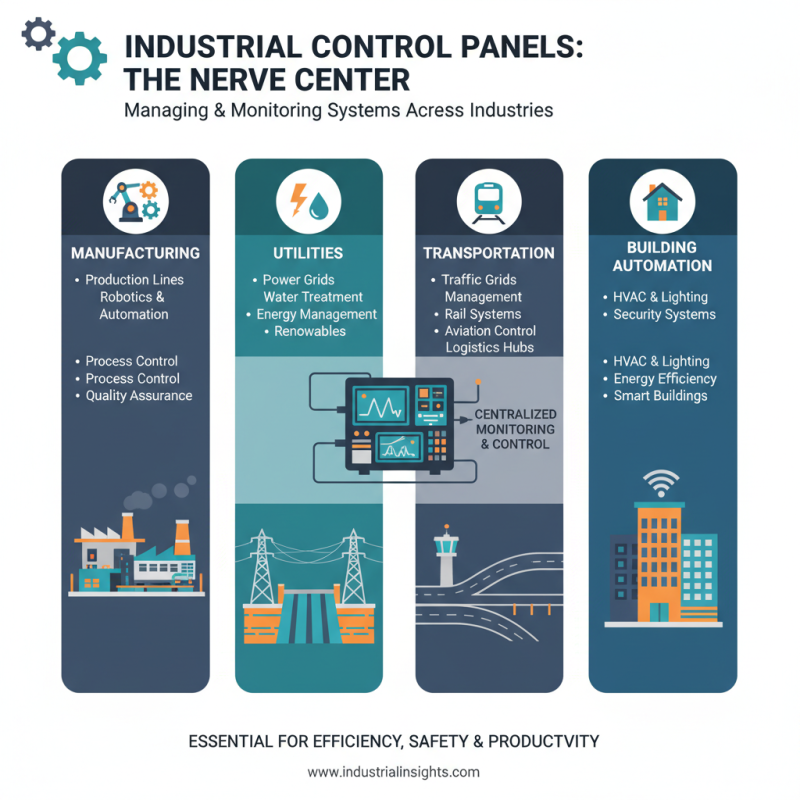
Control panels are essential in various industries. They help manage and monitor systems effectively. Different types of control panels serve unique functions. These panels can be found in manufacturing, utilities, transportation, and more.
For example, industrial control panels automate processes in factories. According to a recent report, the industrial automation market is expected to reach $300 billion by 2025. These panels can be simple or complex, depending on their application. Control panels can include process control panels, motor control centers, and programmable logic controllers. Each type has distinct functionalities tailored to specific tasks.
In the utility sector, control panels play a critical role in energy management. They monitor power distribution systems. A study showed that efficient control panels could reduce operational costs by up to 20%. However, many organizations still rely on outdated systems. This can lead to inefficiencies. Addressing these issues is crucial for improved performance and safety.
The Importance of Control Panels in Automation Systems
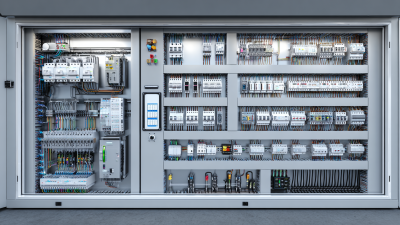
Control panels play a crucial role in automation systems. They serve as the central hub where operators monitor and control various processes. These panels display important information and allow for manual adjustments. Without them, controlling complex machinery would be daunting and prone to errors.
In many industries, control panels improve efficiency. They help streamline operations, minimizing downtime. For instance, a factory might use a panel to adjust production rates quickly. However, not all panels are user-friendly. Sometimes, designs can be confusing. Operators may struggle to find the right controls. This can lead to mistakes or delays.
Moreover, the importance of training cannot be overlooked. Operators must fully understand how to use these panels. Without proper training, even the best control system could fail. Regular assessments and updates are necessary to ensure users stay informed. A well-functioning control panel can enhance productivity. But it requires continuous reflection and improvement to truly serve its purpose.
Control Panel Usage in Automation Systems