How to Master PLC Controller Programming for Beginners?
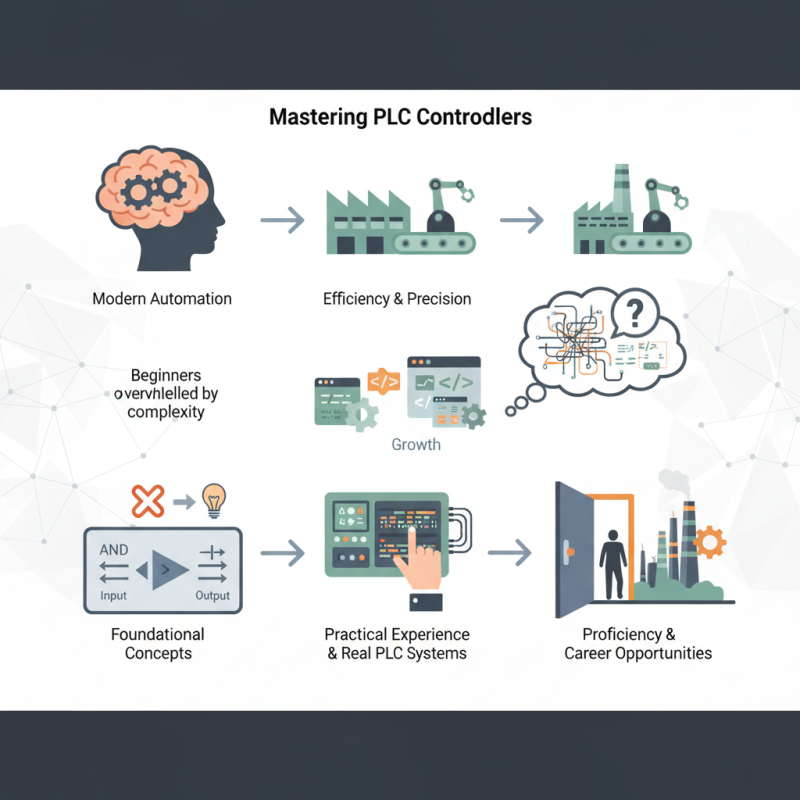
PLC controller programming is essential for modern automation. Many industries rely on these controllers to enhance efficiency and precision. Mastering this skill can open several doors in the engineering field.
Beginners often feel overwhelmed by the complexity of PLC programming. The numerous programming languages and software options can be intimidating. However, focusing on foundational concepts can simplify the learning journey. Start with understanding basic logic, inputs, and outputs.
Practical experience is crucial. Experimenting with real PLC systems can solidify understanding. It’s common to make mistakes during this process. Reflecting on these errors is vital for growth. With dedication and practice, anyone can become proficient in PLC controller programming. Embrace the challenges, and learn from each step.
Understanding the Basics of PLC Controllers: Definitions and Functions
Programmable Logic Controllers (PLCs) are integral to automation. They control machinery in factories, amusement parks, and other settings. A PLC is essentially a robust computer designed for an industrial environment. According to a recent industry report by MarketsandMarkets, the global PLC market is projected to reach $15.61 billion by 2025. This growth highlights the increasing importance of PLCs in modern manufacturing.
PLCs operate by receiving input signals from various sensors. They then process this data and send output signals to control devices like motors and valves. Understanding the basic functions of a PLC is crucial for any beginner. Input and output modules, the processor, and the power supply form the core of any PLC system. One common pitfall for newcomers is underestimating the significance of precise wiring. Miswiring can lead to equipment failure or safety hazards.
Learning to program a PLC requires practice and patience. Beginners often struggle with ladder logic programming, the predominant language for PLCs. In fact, studies show that nearly 30% of novice programmers face challenges in grasping this concept. Hands-on experience, combined with structured learning, can mitigate this. Trying out simple projects, like controlling a light, can build confidence while illustrating key concepts. Experimentation is key, even if it leads to mistakes and a bit of frustration.
PLC Controller Programming Trends
This bar chart illustrates the average hours spent weekly by beginners mastering various areas of PLC controller programming. It highlights the focus areas such as Basic Programming, Advanced Programming, and Fault Detection.
Types of PLC Controllers: From Compact to Modular Systems
When diving into PLC controllers, understanding the types is crucial. There are two primary types: compact and modular systems.
Compact PLCs are integrated units with fixed I/O. They are user-friendly and occupy less space, making them ideal for simple automation tasks. According to industry studies, compact systems account for approximately 60% of the global PLC market, primarily due to their affordability and ease of deployment.
On the other hand, modular PLC systems offer flexibility and scalability. Users can add or remove modules based on specific needs. This adaptability is beneficial for complex operations that require extensive I/O points. Reports indicate that modular systems are gaining traction, projecting a market growth of over 5% annually. However, their complexity can be daunting for beginners. Many struggle with the configuration and setup processes. Learning from these challenges is essential for effective programming.
In summary, selecting the right PLC type impacts efficiency and development. Compact systems may simplify initial setups, while modular systems offer future scalability. Reflecting on personal experiences with each type can uncover insights that enhance mastery in PLC programming.
Fundamentals of PLC Programming Languages: Ladder Logic, Function Block, and More
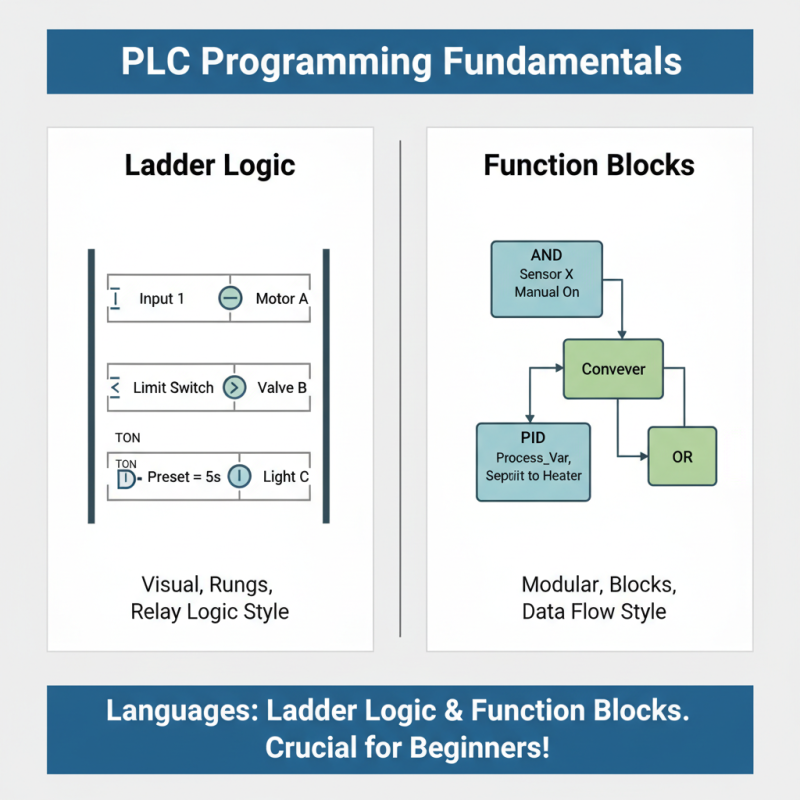
When getting started with PLC programming, understanding the fundamentals is crucial. PLCs primarily use languages like Ladder Logic and Function Block. Ladder Logic closely resembles electrical relay logic. It's visually intuitive, making it easier for beginners. You can see how the control flow works in a clear way. This language is built around rungs and can be complicated for some.
Function Block Diagram (FBD) offers a different approach. It includes blocks that represent functions, linked together by signals. This can be a bit challenging at first. You'll need to grasp how data flows between these blocks. For beginners, this may require time to analyze and troubleshoot. Learning both languages gives a broader view of programming options.
Practicing with small projects can help. Start with basic tasks like turning on a light. Gradually, move to more complex controls. Expect to face difficulties. It’s normal to struggle with understanding the concepts. Reflect on what works and what doesn't. Each failure can teach you something valuable in your programming journey.
Practical Tips for Writing Efficient PLC Code: Best Practices and Common Errors
Writing efficient PLC code requires attention to detail and understanding best practices. One of the fundamental tips is using clear, descriptive naming for variables. Names should be intuitive, reflecting their purpose. This makes the code more readable. Code readability is crucial. It aids troubleshooting and team collaboration. A well-named variable saves time later, especially in complex projects.
Another important aspect is modular programming. Break your code into smaller, manageable functions. This approach not only simplifies debugging but also promotes reuse. It allows you to isolate errors more efficiently. Each module should have a specific function. Do not complicate things; simplicity is key. Avoid long sequences of logic in one rung.
Common errors often arise from oversight. Double-check your logic flows and conditions. Small typos can lead to significant issues. Additionally, remember to comment on complex sections of your code. Comments should explain the logic, not just state the obvious. Writing clear comments ensures you and others will understand the code later. Embrace reflection during your coding process. Evaluate your approaches and learn from mistakes.
Troubleshooting PLC Programs: Techniques and Tools for Beginners
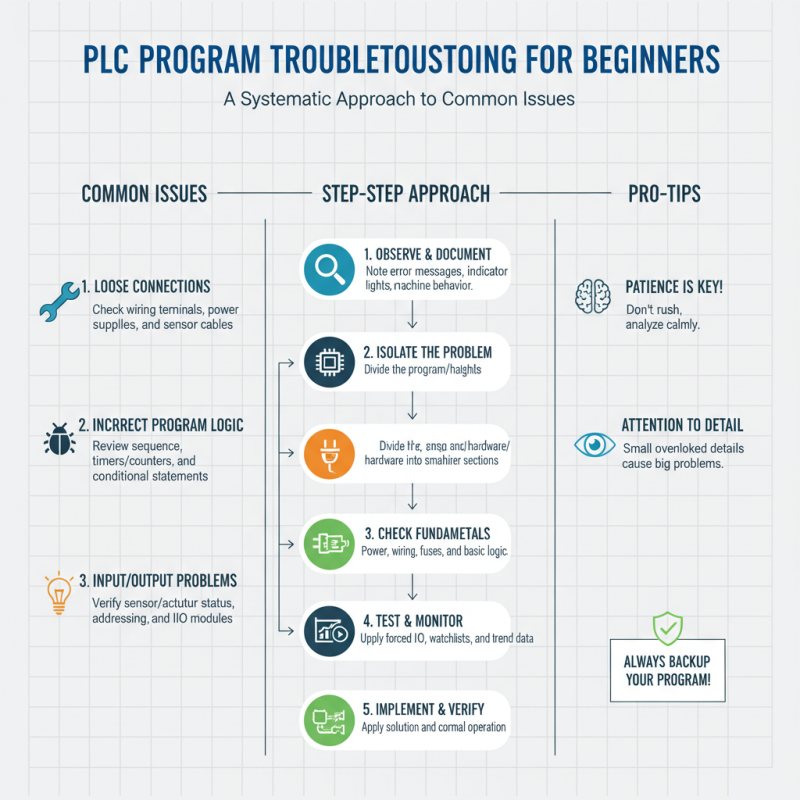
Troubleshooting PLC programs can be daunting for beginners. It requires patience, attention to detail, and a systematized approach. Often, simple issues like loose connections or incorrect programming logic can cause significant problems. Beginners might overlook these fundamental aspects. You may feel stuck when an unexpected error arises. It's essential to take a step back and analyze the situation calmly.
Effective techniques include using simulation software. This allows you to test programs in a controlled environment. Utilizing built-in diagnostic tools helps identify faults quickly. Sometimes, breaking down the program into smaller sections reveals hidden errors. Ensuring your logic follows a clear flow helps too. If an output doesn’t function as expected, consider the input conditions. Check for discrepancies between the intended and actual results. These moments can lead to valuable learning experiences, even if frustrating.
One common mistake is not documenting changes made during troubleshooting. Without proper notes, you may repeat errors. Make it a habit to keep track of adjustments and their outcomes. This will enhance your understanding and effectiveness in future projects. Embrace the trial and error process. Each challenge is a stepping stone to mastering PLC programming.