What is a PLC Panel and How Does It Work?
A PLC panel is a crucial part of modern automation. It integrates various components to control machinery and processes. These panels help industries operate efficiently and reliably.
Understanding how a PLC panel works can seem complex. At the heart of the panel is the programmable logic controller (PLC). This device processes input signals and triggers output actions. It is used in various industries, from manufacturing to transportation.
Many people struggle to grasp the full functionality of a PLC panel. The wiring may seem messy, and programming can appear daunting. However, once understood, these systems offer immense benefits. They can monitor conditions, control equipment, and ensure safety. Understanding a PLC panel opens doors to automation expertise.
What is a PLC Panel? Definition and Overview
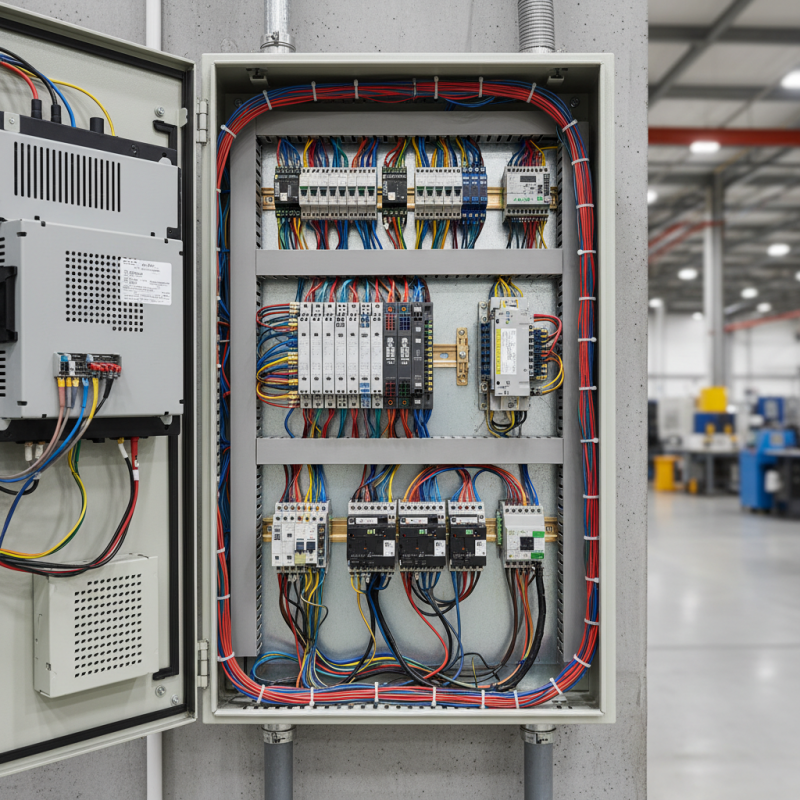
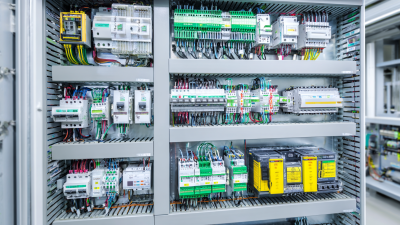
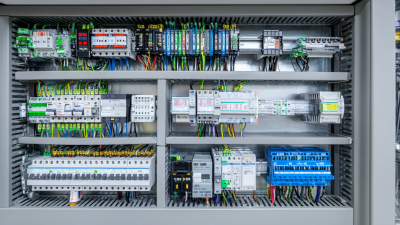
A PLC (Programmable Logic Controller) panel is a crucial component in industrial automation. It serves as the brain of the machinery, controlling various processes efficiently. These panels consist of a CPU, input/output modules, and power supplies, all enclosed in a protective cabinet. The main purpose is to automate equipment and ensure smooth operation in factories, such as controlling conveyor belts, robotic arms, and temperature regulation systems.
According to a recent market report by Research and Markets, the global PLC market is projected to reach $11.3 billion by 2025, growing at a CAGR of 4.5%. This growth highlights the increasing reliance on automation. PLC panels allow for high flexibility and ease of programming, adapting to different processes quickly. However, user skill levels vary. Improper programming can lead to inefficient operations, which underscores the need for thorough training.
Tip: When setting up a PLC panel, ensure all connections are secure. Loose connections can lead to intermittent failures. Regular maintenance checks will help identify issues early. Additionally, consider investing in training for operators to maximize system efficiency. Focused training can reduce programming errors and enhance productivity in operations.
Key Components of a PLC Panel Explained
A PLC panel is a crucial component in automation systems. It houses various elements that control machinery and processes. Understanding its key components is essential for effective operation.
At the heart of the PLC panel is the programmable logic controller itself. This device processes input signals and executes control commands. It communicates with sensors and actuators to monitor conditions and perform tasks. Input modules receive signals from devices. Output modules send control signals to drivers and motors. This interaction is critical for smooth operations.
Another important component is the power supply. It ensures that the PLC and all components operate reliably. Power fluctuations can disrupt the system. Proper grounding and surge protection are necessary. Today's panels also include Human-Machine Interfaces (HMIs). They provide users with visual feedback and control options. However, sometimes users overlook this vital aspect. The interface should be intuitive to enhance usability. Balancing complex functionalities with user-friendly design can be challenging.
How PLC Panels Operate: The Working Mechanism
A PLC panel, or Programmable Logic Controller panel, is crucial in industrial automation. It controls machinery and processes through programmed logic. These panels consist of hardware and software components working together seamlessly.
How do PLC panels operate? They gather input from various sensors and devices. This includes temperature readings, pressure levels, and position sensors. Once the PLC processes this data, it makes real-time decisions. The output commands are sent to actuators, valves, or motors. The entire operation happens in milliseconds, ensuring efficiency.
Tips: Always ensure proper maintenance of your PLC panels. Regular checks can prevent unforeseen failures. Also, keep documentation up-to-date. Clear records help during troubleshooting. Another point to consider is the importance of proper training. Unintentional errors can disrupt operations significantly. Monitoring and adapting to changes are vital to success.
PLC Panel Operational Data Overview
Common Applications of PLC Panels in Industries
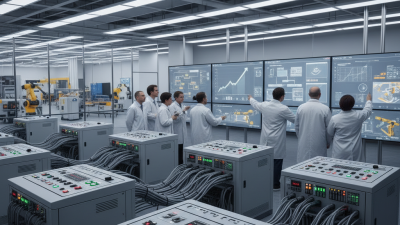
PLC panels are widely used in various industries, owing to their ability to automate complex processes. In manufacturing, they control machinery and production lines. A report by the International Society of Automation (ISA) highlights that automation can increase productivity by up to 30%. This efficiency is critical in fast-paced environments.
Another common application is in water treatment facilities. PLC panels monitor and control water quality, flow rates, and chemical dosing. In fact, about 40% of water facilities globally utilize PLC technology. This adoption helps reduce human error, which can lead to significant improvements in safety and compliance.
Tips: Regular maintenance of PLC panels is essential. Dust accumulation can affect their performance. Ensure to schedule routine cleanings and updates. Additionally, training staff on PLC operations is vital. A knowledgeable team minimizes risks and optimizes workflow. Remember, the effectiveness of a PLC system hinges on the users' understanding.
What is a PLC Panel and How Does It Work? - Common Applications of PLC Panels in Industries
| Application Area |
Description |
Benefits |
Common Devices Used |
| Manufacturing Automation |
Control of machines and processes in a factory setting. |
Increased efficiency, reduced labor costs. |
Conveyors, robotic arms, sensors. |
| Water Treatment |
Automation of water filtration and treatment processes. |
Improved water quality, compliance with regulations. |
Flow sensors, chemical dosing systems. |
| HVAC Systems |
Control of heating, ventilation, and air conditioning systems. |
Energy efficiency, improved comfort levels. |
Temperature sensors, actuators. |
| Food Processing |
Control of food packaging and processing lines. |
Enhanced safety, quality control. |
Scale systems, control panels. |
| Pharmaceutical Manufacturing |
Automation of drug production and packaging. |
Higher precision, regulatory compliance. |
Batch controllers, mixing systems. |
Benefits and Limitations of Using PLC Panels
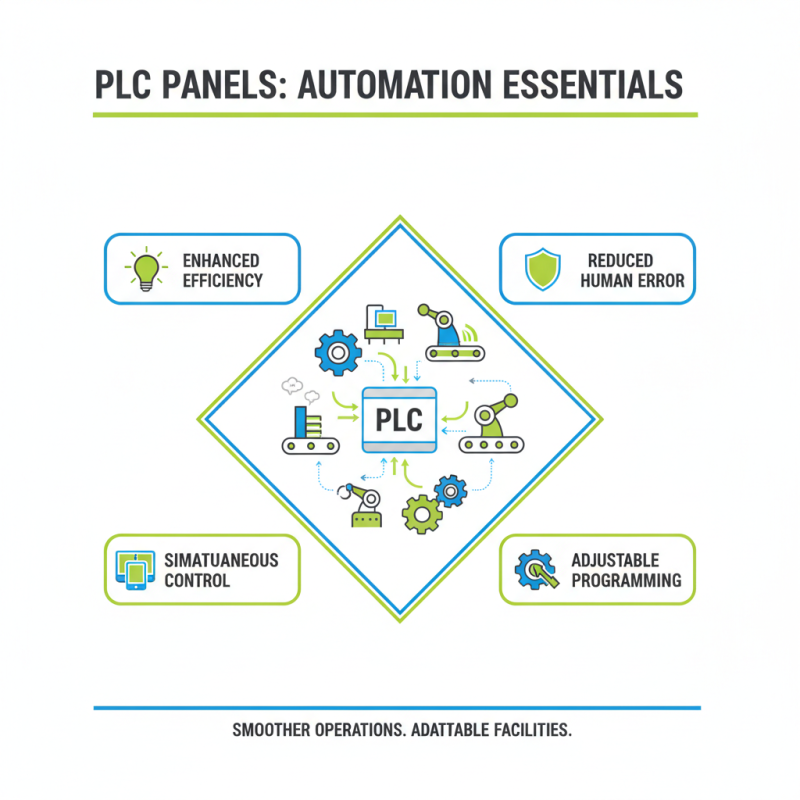
PLC panels have become essential in various industries for automation. They offer several benefits. One advantage is their ability to enhance efficiency. Automation reduces human error and speeds up processes. These panels can control multiple devices simultaneously, creating smoother operations. The programming versatility allows for adjustments based on the changing needs of a facility.
However, there are limitations. First, the initial investment can be high. Installation and configuration require skilled personnel, which adds to costs. Additionally, PLC panels may not be flexible for every application. For example, some complex tasks might exceed their programming capabilities. Users must regularly update and maintain the systems to avoid failures. This can lead to unplanned downtime, which impacts productivity. Thus, while PLC panels are valuable, their implementation demands careful consideration and realistic assessment of operational needs.