
China Top Battery Cooler Manufacturers for Global Buyers
A Battery Cooler helps control heat inside battery packs, supporting stable performance and reducing thermal stress. For electric vehicles, energy storage systems, and industrial equipment, cooling needs vary with pack size, operating conditions, and duty cycle. Some applications use air cooling. Others need liquid circuits, pumps, chillers, and carefully designed channels. Small details matter, including coolant connections, sensor placement, and service access.
China has a broad base of battery thermal-management suppliers, from component makers to system integrators. This guide examines manufacturers serving global buyers and the evidence buyers should request before shortlisting them. Useful checks include production experience, engineering support, quality procedures, test data, and the ability to customize designs. Ask how suppliers validate cooling performance under changing loads, ambient temperatures, and vibration. Request clear drawings and confirm that quoted specifications match the intended battery chemistry and enclosure.
A polished brochure is not enough. Real performance matters. No supplier fits every project, and a low quotation can leave important questions unanswered. Buyers should compare response times, sample evaluation, warranty terms, and support after delivery. They should also confirm which documents and approvals apply in their destination market. Requirements differ. This overview aims to make comparison more practical, while recognizing that supplier claims still need independent review. Good decisions come from evidence, not rankings alone.
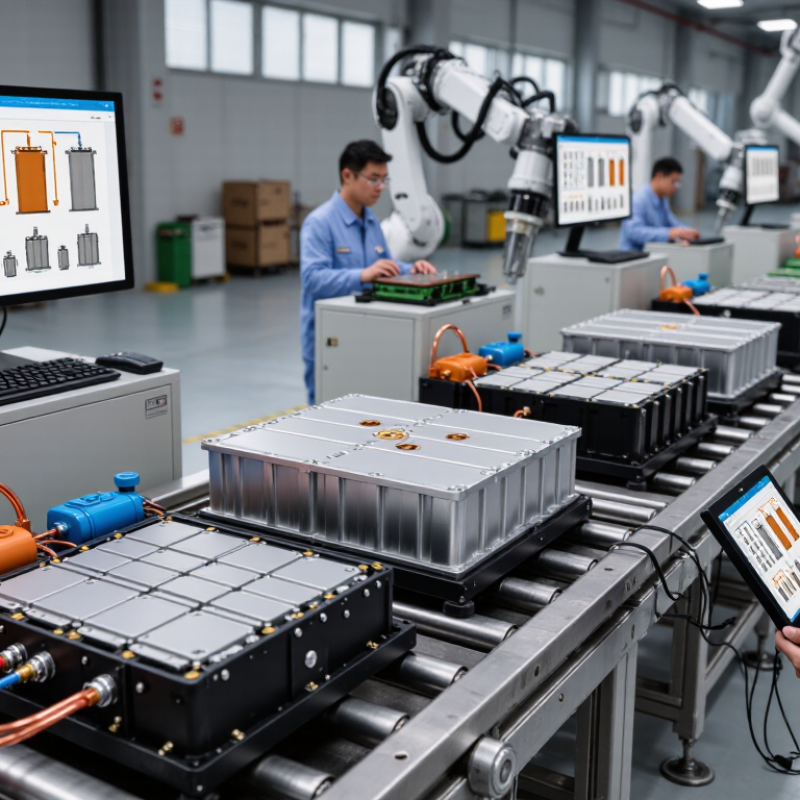
Battery Cooler Fundamentals: Managing Cells Within the Typical 15–35°C Range
For many battery systems, 15–35°C is a practical operating reference, not a universal guarantee. Cell chemistry, charge rate, and supplier specifications can shift the preferred limits. Battery cooling aims to keep cells near this range and reduce temperature differences across a pack. A module with one warm corner may age unevenly, even when its average temperature looks acceptable.
During fast charging or sustained high output, heat builds inside cells and travels through module plates, interfaces, and coolant. Liquid systems can move heat efficiently from tightly packed modules; forced-air designs may suit lower heat loads or simpler layouts. Sensors should track representative cell locations, not just coolant inlet temperature. The inlet can look cool while cells remain warm. That detail matters.
Cooling must also respond to ambient conditions and changing duty cycles. In hot weather, a radiator or chiller needs enough capacity to reject heat. In cold conditions, cooling may need to pause or work alongside controlled heating. Engineers should check temperature spread, flow balance, pressure drop, and sensor placement under realistic loads. A clean lab test is useful, but it cannot reproduce every site. Real operating data may reveal awkward gaps in the design. These are worth revisiting.

Market Scale: IEA Reports 750 GWh of EV Battery Demand in 2023
The International Energy Agency’s Global EV Outlook 2024 reports that electric-car battery demand reached about 750 GWh in 2023, roughly 40% higher than in 2022. That scale changes the questions global buyers should ask battery-cooling suppliers. Can a system control temperature evenly across a large pack, not just one test module? Can its performance be documented under repeated fast-charging and high-load conditions?
Small temperature differences matter. Uneven cooling can contribute to inconsistent cell aging, while poor service access can make routine maintenance harder. Buyers should request test data covering coolant flow, pressure drop, leak checks, and temperature variation across the pack. Ask how results were measured and under what ambient conditions. A clean chart is not enough. The test setup matters.
The IEA’s demand figure also points to a practical sourcing challenge: cooling components must scale without losing consistency. Compare supplier production capacity, material traceability, quality controls, and support for design changes. For liquid-cooled packs, inspect cold-plate channels, seals, connectors, and installation tolerances. These details can look minor on a drawing. They are not always minor in production. I would also leave room for uncertainty: reported market demand does not predict the needs of every vehicle platform, so buyers should validate cooling performance with their own pack data.
Cooling Technologies Compared: Air, Liquid, and Refrigerant-Based Systems
Battery cooling choice affects cell temperature spread, charging limits, and service needs. Air systems move heat with fans and shaped ducts. They are relatively simple to inspect and may suit moderate loads. Dusty filters, blocked inlets, or uneven airflow can create hot spots. That matters in compact packs. A tidy test bench may not reveal awkward service access.
Liquid systems circulate coolant through cold plates or channels. They can manage heat more evenly during fast charging or sustained high output. Buyers should check pump reliability, seals, leak detection, and coolant maintenance requirements. Even a small leak deserves attention. Refrigerant-based systems can offer strong cooling in limited space, particularly when integrated with a heat-pump loop. Their controls are more involved. Valves, pressure management, and specialist servicing can add cost.
When comparing battery cooler manufacturers, request temperature maps, load-cycle test data, and clear maintenance instructions, not just rated cooling capacity. Ask how performance changes in cold weather and after dust exposure. Real installations are messy. Pack layout, local climate, duty cycle, and access for repairs can all change which system works best. A higher-capacity unit is not automatically the better fit.
Leading Chinese Battery Cooler Manufacturers: Products and Global Reach
Chinese battery cooler manufacturers supply liquid-cooling units, cold plates, coolant manifolds, and control components for energy storage and electric vehicles. Product designs vary by application. Some suppliers offer custom plate dimensions, flow paths, and electrical interfaces to match a buyer’s battery layout.
Fit matters. A cooler that looks suitable on paper may perform differently once installed. Buyers can request thermal test data, pressure and leak-test records, and details about coolant compatibility. It also helps to review operating temperature ranges and service access before approving a design. Small gaps in requirements can become costly later.
Many manufacturers serve overseas customers through export teams and international distributors. They may provide technical drawings, installation guidance, and export packaging, but service coverage differs by supplier. Confirm which tests and certifications apply to the specific model and destination. Details vary. A factory visit or independent inspection can help verify production controls, though it takes time and adds cost. That trade-off deserves an honest discussion.
Global Buyer Checklist: Performance, Compliance, Production Capacity, and Service
For global buyers, a battery cooler must maintain stable cell temperatures under real operating conditions, not just pass a showroom demonstration. The IEA’s Global EV Outlook 2024 reports that electric-car sales reached nearly 14 million in 2023, about 18% of new car sales. That growth raises the stakes for dependable thermal management. Ask suppliers for test results showing heat load, ambient temperature, coolant flow, pressure drop, and power consumption. Numbers need context. Request repeat tests across operating extremes, and check whether performance changes after vibration or thermal cycling.
Compliance needs more than a certificate on a slide. Request traceable reports and confirm which standards apply to your vehicle and destination markets. ISO 16750 covers environmental conditions and testing for road-vehicle electrical and electronic equipment; ISO 26262 may apply where the cooler’s functions fall within a safety-related system. Ask for material and fluid documentation, plus clear revision records. Requirements vary by application. Verify them independently.
Production capacity deserves an on-site or third-party review. The IEA reports global battery demand exceeded 750 GWh in 2023, up about 40% from 2022, making supply resilience worth checking. Review monthly output, bottleneck equipment, quality controls, and component sourcing. A sample is not a factory. Agree on spare-part availability, response times, and failure-analysis procedures before launch. A weak point remains: polished audits can miss shift-to-shift variation, so request production records from different shifts.
China Top Battery Cooler Manufacturers for Global Buyers – Global Buyer Checklist: Performance, Compliance, Production Capacity, and Service
| Evaluation Dimension | What to Check | Evidence to Request | Buyer Notes |
|---|---|---|---|
| Cooling performance | Cooling capacity, temperature-control range, temperature uniformity, and recovery time under stated operating conditions. | Test reports showing ambient temperature, coolant or airflow conditions, battery load, measurement points, and test method. | Compare results only when test conditions are equivalent. |
| Energy and operating cost | Power consumption, efficiency data, standby draw, and expected maintenance needs for the intended duty cycle. | Electrical ratings, measured power data, duty-cycle assumptions, and maintenance schedule. | Confirm voltage, frequency, and local power requirements. |
| Battery compatibility | Compatibility with battery dimensions, chemistry, heat output, installation layout, and the battery-management system interface, where applicable. | Interface drawings, heat-load assumptions, electrical schematics, and documented integration or validation tests. | Confirm requirements for the specific battery application. |
| Safety and protection | Protection against overtemperature, abnormal operation, leaks where liquid cooling is used, and electrical hazards; check alarms and shutdown behavior. | Risk assessment, protection-function test records, wiring diagrams, and installation and operating instructions. | Assess the complete system, not just individual components. |
| Environmental protection | Enclosure protection, corrosion resistance, vibration tolerance, and operating-temperature limits appropriate to the installation environment. | Relevant test reports and the exact test standard, configuration, and tested product model. | IP classifications are defined in IEC 60529; verify the required rating for the application. |
| Regulatory compliance | Identify applicable market requirements for the complete cooler and its electrical, radio, pressure, or refrigerant-related components, as relevant. | Declarations, certificates, test reports, product labels, and a list of covered models and configurations. | Requirements vary by destination market and product design. |
| Battery-related standards | Check whether battery safety standards are relevant to the supplied battery system and its intended use; do not assume a cooler certificate covers the battery. | Applicable battery-system documentation and test records. IEC 62619 addresses safety requirements for industrial secondary lithium cells and batteries. | Confirm scope and applicability with the project’s compliance specialist. |
| Transport documentation | Determine whether the shipment includes lithium batteries and whether dangerous-goods transport rules apply to the shipped configuration. | Shipping classification and required transport documents. UN Manual of Tests and Criteria, subsection 38.3, sets tests for lithium cells and batteries transported by air, sea, road, or rail. | A cooler-only shipment and a battery-containing shipment may have different requirements. |
| Quality management | Review incoming inspection, process controls, traceability, nonconformance handling, and corrective-action procedures. | Current quality-system certificate, its scope and issuing body, plus sample inspection and corrective-action records. | A certificate does not replace product-specific verification. |
| Production capacity | Assess demonstrated output, available production slots, peak-season constraints, and the ability to scale the required configuration. | Recent production records, capacity calculation, production schedule, and evidence of equipment and workforce availability. | Separate rated capacity from actual output and committed capacity. |
| Lead time and delivery | Confirm sample, tooling, production, inspection, and shipping timelines, including the assumptions behind quoted delivery dates. | Written production milestones, shipping terms, packaging details, and a contingency plan for delays. | Confirm delivery terms and named place under the agreed Incoterms® rule. |
| Customization and change control | Review capability for mechanical, electrical, control, and language adaptations, and how design changes are reviewed and approved. | Change-control procedure, design-review records, sample approval process, and revision-controlled drawings. | Document the approved configuration before production. |
| Warranty and service | Review warranty coverage, exclusions, spare-parts availability, technical support channels, and service arrangements in the destination market. | Written warranty terms, parts list, support process, escalation contacts, and agreed response and resolution targets. | Set service-level expectations in the purchase agreement. |
| Supplier verification | Verify the legal supplier, manufacturing site, subcontracted processes, product ownership, and consistency between samples and production goods. | Business registration details, factory audit findings, approved-supplier list, and pre-shipment inspection records. | Use independent inspection where project risk warrants it. |
Note: Applicable standards and market approvals depend on the product configuration, battery system, installation, and destination country. Confirm requirements for the specific project before purchase.

