China Top PLC Programming Solutions for Global Buyers?

China has become a major source of industrial automation for global manufacturers. The International Federation of Robotics reported 276,288 industrial robot installations in China during 2023. This represented about 51% of global installations. That scale creates a deep ecosystem of PLC suppliers, system integrators, panel builders, and controls engineers.

For international buyers, the real question is not simply price. It is whether a Chinese plc programming solution can control a conveyor, servo drive, pneumatic valve, and safety circuit reliably. Experienced integrators commonly work with IEC 61131-3 languages, including Structured Text and Ladder Diagram. They also configure communication through PROFINET, EtherNet/IP, Modbus TCP, or CANopen. These details matter when a machine must connect with Siemens, Rockwell Automation, Mitsubishi, or Omron equipment.

The China Compulsory Certification system and ISO-based quality practices also deserve careful review. However, compliance documents alone cannot prove field performance. A factory acceptance test, version-controlled program, and clear alarm list are more convincing. Small details matter. A missing sensor address can stop an entire packaging line.

Reports from MarketsandMarkets and ARC Advisory Group continue to show strong demand for industrial automation, driven by smart manufacturing and labor efficiency. Still, market forecasts are not guarantees. Some low-cost offers hide weak documentation, limited remote support, or unclear spare-parts plans. Buyers should compare programming standards, cybersecurity controls, testing procedures, and long-term service capability. China offers impressive technical depth, but supplier evaluation must remain practical, evidence-based, and slightly skeptical.

China Top PLC Programming Solutions for Global Buyers?

What PLC Programming Solutions Mean for Global Buyers

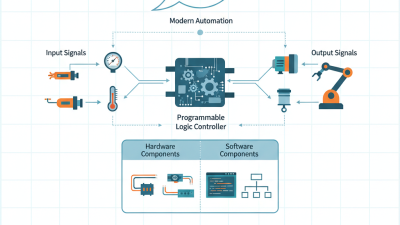
For global buyers, PLC programming solutions mean more than writing code for a controller. They connect sensors, motors, valves, and operator screens into a process people can monitor and adjust. A practical project begins with clear requirements: machine functions, input and output lists, communication needs, and expected production changes. These details help buyers compare proposals on more than price.

Good programming should be readable, tested, and documented. Ask for an alarm list, backup files, and clear descriptions of operating modes. During commissioning, a technician may check a sensor signal at the cabinet, then confirm that the correct screen message appears.

Small checks matter. So does language support, especially when operators need instructions in their working language.

Remote assistance can help, but it cannot replace accurate drawings or a safe site procedure. Even a tidy program may need revision when real machines behave differently from the original plan. Buyers should allow time for testing and honest feedback. A little uncertainty is normal; hidden assumptions are not.

How to Identify the Right PLC Platform and Programming Tools

China Top PLC Programming Solutions for Global Buyers

How to Identify the Right PLC Platform and Programming Tools

Start with the machine, not the software brochure. Define the number of inputs, outputs, motion axes, response times, and future expansion needs. A small packaging line may require simple ladder logic, while a coordinated system may benefit from structured text and function blocks. Follow IEC 61131-3 practices where possible. Clear naming matters during maintenance.

Check whether the programming environment supports simulation, online diagnostics, version control, and secure user access. These tools can reduce commissioning time when a sensor fails at 2 a.m. Confirm support for common industrial networks and readable data logs. Ask for sample projects, manuals, and training materials before purchasing. Test it early.

In practical commissioning work, I have seen teams choose a controller only because its price looked attractive. Later, limited memory and weak troubleshooting tools created expensive delays. That decision was not entirely wrong, but it was incomplete. Buyers should review processor capacity, spare parts, update policies, and remote support response times. Local engineering language can also affect project speed. Do not ignore documentation quality. A reliable platform should let technicians understand the program months after installation. Some suppliers promise broad compatibility, yet actual integration still needs careful testing. Request a demonstration using your own I/O list and operating sequence. That small step often reveals hidden gaps before production begins.

Key Steps in Planning, Coding, Testing, and Deploying PLC Programs

Planning a PLC program starts with the machine, not the software screen. Define each sensor, actuator, operating mode, and safety condition in clear tables. A useful I/O list includes addresses, signal types, normal states, and fault responses. Operators should understand the sequence before coding begins. Small misunderstandings become expensive during commissioning.

During coding, use structured routines, descriptive tags, and short comments near critical logic. Separate automatic, manual, alarm, and maintenance functions. Add interlocks for motors, valves, temperature limits, and unexpected signal loss. Follow recognized industrial programming practices, such as IEC 61131-3 principles, while matching the site team’s skills. Simple code is easier to inspect.

Testing should begin with simulation and continue through controlled factory trials. Force one input at a time, record every output, and test power recovery carefully. Check alarms from the operator’s viewpoint. Some programs pass normal tests but fail when a sensor remains stuck. That gap deserves attention. During deployment, back up the final project, label versions, and document changed parameters. Keep a rollback copy. 现场 conditions can expose planning errors, so commissioning teams should review failures openly and adjust the design instead of hiding them.

How to Evaluate PLC Programming Suppliers and Service Capabilities

When evaluating PLC programming suppliers, look beyond hourly rates and polished presentations. Ask what information they need before estimating a project: electrical drawings, I/O lists, operating sequences, and safety requirements. Clear questions often reveal practical experience. A capable team should explain how it handles alarms, startup conditions, and communication faults in plain language.

Request a sample test plan or anonymized project documentation. Check whether the supplier verifies logic against realistic operating scenarios, not only whether the program compiles. For example, ask how a conveyor behaves after a sensor stops responding, or what operators see when a drive reports a fault. Specific answers are more useful than broad promises. Keep the scope measurable.

Service capability matters after delivery. Confirm who can support commissioning, how remote troubleshooting is arranged, and what response times are actually available. Ask for source files, revision records, backup procedures, and operator documentation. These details reduce dependence on one programmer. A handover should make sense to the maintenance technician opening the cabinet months later.

Do not assume every supplier’s process fits your site. A small pilot or staged review can expose gaps before wider deployment. No checklist catches everything. I would also ask how changes are approved; this is easy to overlook when deadlines get tight. Good communication helps, but it cannot replace clear acceptance criteria and agreed responsibilities.

Evaluating PLC Programming Suppliers: Suggested Buyer Scorecard

Suggested evaluation weighting for comparing suppliers—not measured supplier performance or market survey data. Ask for evidence such as project references, sample documentation, testing procedures, and support terms, then score each supplier against these criteria.

Common Applications, Integration Needs, and Future PLC Trends

Programmable logic controllers run conveyor sequencing, pump stations, packaging lines, and building ventilation. A technician might trace a fault from a photoelectric sensor to an output relay, then verify the sequence at the machine. That practical work matters. A fast controller still struggles when signal names, alarm logic, or wiring drawings differ across systems.

Integration often means connecting PLCs with drives, robots, safety circuits, and supervisory software. The International Federation of Robotics reported 541,302 industrial robot installations worldwide in 2023, while the operating stock reached 4.28 million, up 10%. These figures show the scale of automated equipment requiring coordinated control, not a direct count of PLC deployments. Buyers should check communication protocols, response times, spare parts, and commissioning support before selecting a solution. Small details can stall a project.

Future systems are adding edge analytics, remote diagnostics, and tighter links between production data and maintenance planning. The World Economic Forum’s 2023 Future of Jobs report found that 75% of surveyed employers expected to adopt AI within five years. That expectation does not make AI suitable for every control loop; deterministic PLC logic remains essential for predictable machine actions. Security and legacy compatibility deserve equal attention. That boundary is easy to underestimate. Pilot upgrades on one production cell first, and document what operators still need to do manually. The documentation is often imperfect, too.

China Top PLC Programming Solutions for Global Buyers? - Common Applications, Integration Needs, and Future PLC Trends

Application Typical PLC Programming Solution Common Integration Needs Relevant Interfaces and Protocols Emerging Trend
Packaging and material handling Sequence control for conveyors, feeders, filling, sealing, labeling, and safety-related machine stops. Coordination with variable-speed drives, sensors, barcode readers, HMIs, and upstream or downstream equipment. Ethernet-based industrial communication, Modbus TCP, and digital or analog I/O; the available options depend on the equipment. More recipe management, production-data collection, and diagnostics to support faster changeovers and troubleshooting.
Water and wastewater treatment Control of pumps, valves, filtration steps, level management, and alarms, with sequencing suited to the process. Connection to flow, pressure, level, and water-quality instruments, plus operator stations and supervisory monitoring. Modbus RTU or TCP and 4–20 mA instrumentation are common; protocol selection depends on field devices and project requirements. Remote monitoring and condition-based maintenance, with secure access and clear separation between control and business networks.
HVAC and building services Time schedules, temperature control, equipment interlocks, and alarm handling for air-handling units, pumps, and chillers. Integration with building-management systems, room sensors, meters, and mechanical equipment controllers. BACnet and Modbus are commonly used in building automation; confirm supported variants and points lists before procurement. Energy monitoring and demand optimization using operational data, while retaining local control if network services are unavailable.
Discrete manufacturing and assembly Machine sequencing, part-present checks, station interlocks, and coordination of actuators and production cells. Data exchange with robots, vision systems, drives, safety devices, HMIs, and manufacturing execution systems. Industrial Ethernet protocols and OPC UA may be used for controller-to-controller or supervisory data exchange, subject to compatibility. Modular machine programs and standardized data models can make equipment reuse and system integration easier.
Energy monitoring and utilities Acquisition of operating values and control of auxiliary equipment such as pumps, fans, and utility skids. Connection to power meters, temperature and pressure sensors, supervisory systems, and reporting tools. Modbus RTU or TCP is widely used for meter data; OPC UA or other gateways may support higher-level data exchange. Edge data processing can provide local summaries and alarms before selected information is sent to central platforms.
Remote equipment and process skids Local automatic control with status reporting, fault handling, and defined behavior during communication loss. Remote I/O, telemetry links, operator access, and integration with a central monitoring system. Ethernet, serial links, or cellular gateways may be used; the choice depends on distance, coverage, latency, and site conditions. Cybersecurity measures such as network segmentation, controlled remote access, account management, and update planning are increasingly important.

Protocol support and integration requirements vary by controller, device, application, and project specification. Confirm interoperability, applicable safety requirements, and cybersecurity controls during system design.

Scroll to Top