5 Best Electrical Control Panel Suppliers for Global Buyers
For global buyers, choosing an electrical control panel supplier is a practical decision with long-term consequences. The panel must fit the machine, site conditions, and maintenance plan—not just the initial quotation. A cabinet arriving at a factory may look complete, yet small differences in wiring labels, component access, or documentation can slow commissioning. Details matter.
This guide compares five suppliers through factors buyers can verify: engineering capabilities, customization options, quality processes, delivery support, and service after installation. It also considers how clearly a supplier explains its technical scope. Ask for drawings, component specifications, test records, and references for projects similar to yours. Check that stated certifications and standards apply to the equipment and destination market; requirements can differ by application and location.
No shortlist can identify one best choice for every project. A large supplier may offer broad support, while a smaller specialist may provide closer design attention. Neither is automatically the safer option. Brochures rarely show every limitation, and a polished presentation is not proof of a good technical fit. That is worth remembering. Use the comparison as a starting point, then confirm lead times, communication arrangements, and responsibilities directly with each company. A careful review takes effort, but it can prevent costly surprises after the panel reaches the site.
What Electrical Control Panel Suppliers Provide
5 Best Electrical Control Panel Suppliers for Global Buyers
What Electrical Control Panel Suppliers Provide
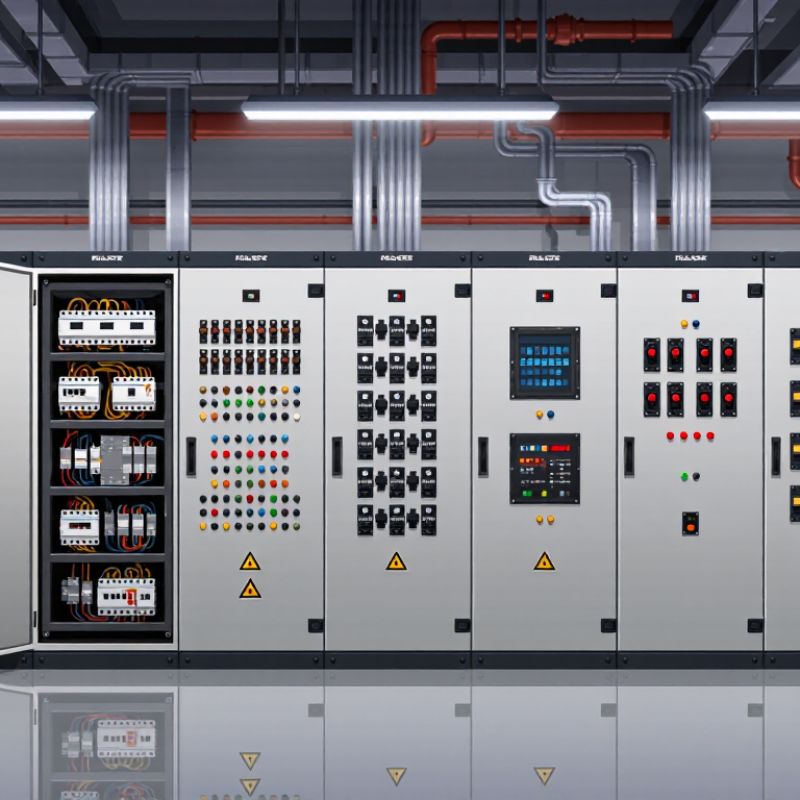
Reliable suppliers provide more than a steel cabinet with wired components. They interpret electrical drawings, select breakers and contactors, design busbar layouts, and integrate PLC, HMI, and safety circuits. Strong suppliers also deliver heat calculations, short-circuit ratings, terminal schedules, and clear wiring diagrams. These details matter when technicians troubleshoot a crowded panel at 2 a.m.
The IEA’s Electricity 2024 report projects global electricity demand to grow by an average of 3.4% annually through 2026. That growth increases pressure on factories, utilities, and infrastructure operators to improve control reliability. A capable supplier should therefore offer factory acceptance testing, insulation checks, functional simulations, and documented inspection records. Compliance with IEC 61439 supports consistent low-voltage assembly verification, but certification alone does not guarantee thoughtful engineering.
Good suppliers also provide enclosure protection suited to dust, moisture, heat, and corrosive locations. They can manage international voltage systems, component availability, spare parts, remote support, and lifecycle maintenance. The best five candidates are not always the largest companies. They are the ones that explain design limits, disclose substitutions, and respond clearly when specifications change. One weakness is often overlooked: documentation arrives late. A perfect panel with incomplete drawings still creates expensive site delays. Careful buyers should request sample test reports, revision control procedures, and realistic delivery records before signing.
Key Criteria for Evaluating Suppliers in Global Markets
Choosing a control panel supplier is not only a price decision. Buyers should check engineering capability, documented testing, delivery reliability, and support across time zones. IEC 61439-1:2020 sets general requirements for low-voltage switchgear and controlgear assemblies. Ask suppliers how they verify designs and test each completed assembly. Request sample inspection records, wiring diagrams, and clear change-control procedures. A polished quotation is not proof of build quality.
Delivery performance matters when panels must arrive before equipment installation. The World Bank’s 2023 Logistics Performance Index assessed 139 countries using six dimensions, including infrastructure, tracking, and timeliness. Use these measures as context, then ask for supplier-specific data: on-time delivery rates, typical lead times, and recent shipment references. Confirm how the supplier protects components during transit. A dented enclosure can create costly rework.
Tips: Share the operating voltage, enclosure conditions, and destination requirements before requesting bids. Compare like with like. Ask who handles commissioning questions and spare parts after delivery. Check response times in writing. Also, leave room for judgment: supplier scorecards can miss communication problems that only appear during a real project. A short technical call may reveal gaps that documents do not.
Five Electrical Control Panel Suppliers for Global Buyers
Global buyers usually compare five supplier profiles: custom panel builders, modular manufacturers, OEM and ODM specialists, regional export suppliers, and engineering-led integrators. Each serves a different project reality. Custom builders suit unusual layouts or strict process requirements. Modular manufacturers often support repeat orders with stable drawings and faster production. OEM and ODM suppliers can adapt enclosures, wiring, and interfaces for established equipment makers.
Regional export suppliers may offer practical communication and familiar shipping routines. Engineering-led integrators usually provide stronger support for PLC configuration, motor control, testing, and site commissioning. Experience matters here. A supplier should explain cable sizing, heat management, short-circuit ratings, and inspection steps in clear language. Vague answers are a warning sign. A polished catalog proves little by itself.
Tips: Request a sample wiring diagram, inspection checklist, and production timeline before signing. Ask how the supplier handles design changes, damaged components, and remote troubleshooting. Check whether drawings use your required standards and measurement system. Factory photos can help, but live video inspections are more convincing. No supplier is perfect. Even a capable team may miss a minor label or terminal detail during a busy production cycle. That is why documented approvals and factory acceptance tests remain essential. Global purchasing is not only about the lowest quote. It is about predictable performance, traceable communication, and support after the panel reaches the site.
Comparing Supplier Capabilities, Certifications, and Service
Global buyers should compare panel suppliers by engineering depth, documented quality, and after-sales reach—not price alone. Ask for sample wiring diagrams, short-circuit test evidence, component traceability, and clear revision control. IEC 61439 applies to many low-voltage assemblies, but confirm the relevant standard and local requirements for each project. A certificate on file is not enough. Check its scope, issuing body, and validity.
The IFR World Robotics 2024 report recorded 4.28 million industrial robots operating in factories worldwide in 2023. That installed base makes reliable control integration and commissioning support increasingly important. Ask suppliers how they handle PLC changes, factory acceptance testing, spare parts, and remote troubleshooting. The IEA’s Electricity 2025 report says global electricity demand rose 4.3% in 2024, adding pressure to plan capacity and delivery carefully. Small details matter. Compare quoted lead times with actual project references, and ask who responds when a panel fails after installation. Service promises sound reassuring, but response coverage should be written down. One weak point: buyers often compare certificates more carefully than wiring workmanship. Request inspection records and a redacted test report before placing an order.
5 Best Electrical Control Panel Suppliers for Global Buyers - Comparing Supplier Capabilities, Certifications, and Service
| Supplier Profile | Typical Capabilities | Standards and Certification Evidence to Check | Engineering and Customization | International Service Considerations | Best Fit | Buyer Due Diligence |
|---|---|---|---|---|---|---|
| 1. Multi-region panel builder | Panel design and assembly for industrial projects, with production or service resources in more than one region. | For low-voltage assemblies, check whether the proposed design is verified to IEC 61439 where applicable. For the U.S. market, confirm whether the exact panel and manufacturing location meet the applicable UL requirements. | Often suited to projects that need local adaptations, regional documentation, or coordination across multiple sites. | Ask which locations handle installation support, spare parts, warranty claims, and local-language documentation; coverage varies by supplier and contract. | Buyers managing projects across multiple countries or seeking regional support. | Request a site list, project references for comparable applications, and evidence linking certificates or listings to the actual factory and panel scope. |
| 2. Specialist industrial control-panel shop | Builds control panels around customer specifications, machine requirements, and defined electrical designs. | For U.S. industrial control panels, check the scope and status of any UL 508A program or listing. Confirm the product’s destination-market requirements separately. | Can be a good fit for custom machine controls, special layouts, and engineering changes; confirm design responsibility and revision control. | Clarify remote troubleshooting hours, commissioning availability, and how replacement components are sourced in the destination country. | Machine builders and industrial buyers needing application-specific panels. | Review sample drawings, wiring documentation, inspection procedures, change-control processes, and acceptance-test records. |
| 3. Turnkey system integrator with panel fabrication | May combine panel fabrication with controls engineering, programming, system integration, and commissioning. | Check the standards and approvals required for the complete installation, not only the panel. Verify any claimed certification against the relevant scope and issuing body. | Can coordinate panels with automation software, field devices, and plant systems; clarify interfaces and responsibility for the complete system. | Confirm whether on-site commissioning, training, and post-startup support are included, and identify any local subcontractors. | Projects where the buyer wants one accountable partner for controls integration and panel delivery. | Define the system boundary, software ownership, cybersecurity responsibilities, test plan, and handover documentation before ordering. |
| 4. Export-focused contract manufacturer | Produces panels or electrical assemblies to buyer-provided drawings, bills of materials, and inspection requirements. | Check that components and finished assemblies meet the destination market’s applicable requirements. ISO 9001 refers to a quality-management system; it does not by itself certify a particular panel design. | May support repeat production and buyer-controlled designs; confirm engineering-change support, material substitutions, and traceability arrangements. | Evaluate export packaging, shipping terms, customs documentation, lead-time planning, and the process for handling transit damage or nonconformities. | OEMs and project buyers with established designs seeking production capacity. | Audit quality controls, incoming inspection, test records, component traceability, and approval procedures for substitutions. |
| 5. Regional low-voltage assembly specialist | Focuses on low-voltage distribution or control assemblies for a defined market or application segment. | For assemblies within its scope, request the applicable IEC 61439 design-verification and routine-verification evidence. Check local regulations and approvals for the installation country. | May offer application-specific configurations; confirm rated current, short-circuit withstand, enclosure protection, and environmental conditions against the project specification. | Regional knowledge can help with local codes and logistics; verify service territory, response commitments, and spare-parts availability in writing. | Buyers seeking a specialist for a defined local market or low-voltage application. | Compare technical schedules and test documentation against the project’s actual operating conditions, not just a brochure description. |
Note: These are anonymized supplier profiles, not named-vendor rankings or claims about specific companies. Certification and listing status must be verified for the exact product, factory, and destination market. Requirements depend on the application and local regulations.
How to Select a Supplier for Your Project Requirements
5 Best Electrical Control Panel Suppliers for Global Buyers
How to Select a Supplier for Your Project Requirements
Global electricity demand is forecast to grow by about 4% in 2024 and 2025, according to the International Energy Agency’s Electricity 2024 report.
This growth increases pressure on control panel buyers. The best supplier is not always the cheapest one.
It must match your voltage, enclosure, protection, communication, and installation requirements.
Look for five practical strengths: verified IEC 61439 design compliance, suitable regional certifications, traceable components, documented factory testing, and responsive technical support.
Ask for short-circuit calculations, wiring drawings, inspection records, and a sample FAT procedure. Confirm whether the supplier can provide IP-rated enclosures, temperature assessments, spare parts, and clear documentation in your working language. A reliable supplier should explain limitations before receiving the purchase order.
Cybersecurity also deserves attention. The 2024 Cost of a Data Breach Report places the average global breach cost at 4.88 million dollars.
Remote monitoring and networked PLCs can increase operational exposure. Request password policies, access controls, firmware support, and a patching process.
I have learned that a polished quotation proves very little. A spreadsheet cannot show loose terminals, poor labeling, or delayed service.
Ask for factory videos, customer references, and a witness inspection when the project is critical. Supplier claims still need independent verification.
Related Posts
-
How to Choose the Right Electrical Control Panel?
-

Top 10 PLC Control Panels You Must Consider for Global Sourcing?
-

Effective Manufacturing Control Systems Tips for Success?
-

Maximizing Efficiency: The Ultimate Guide to Control Cubicles in Modern Workspaces
-
Essential Tips for Choosing a Pneumatic Control Panel?
-

10 Essential Tips for Choosing Control Panel Solutions